


Video Guide

Mystery Box: The Grey Bag That Hides Its Color
A Mystery Box is a grey bag marked with question marks sitting in the upper box area, and you have no idea what color it holds until you let it go.
Tap it and the game throws a shade at you before you ever got to plan for it. This guide shows how to live with that surprise instead of letting it wreck your run.

What the Grey Bag Actually Is
In one respect it behaves like any top marble box: a tap sends marbles down onto the belt.
The catch is that the shade stays secret until the marbles fall. A regular colored box lets you spot yellow, green, blue, or orange before you poke it; this one shows you a blank.
You could get the exact tone you were hunting for, or the bag could spill a dead color that no receiver wants. In both cases the truth appears only once you have already committed.
So the threat is not the pouch itself — it is that you are forced to choose while blind.

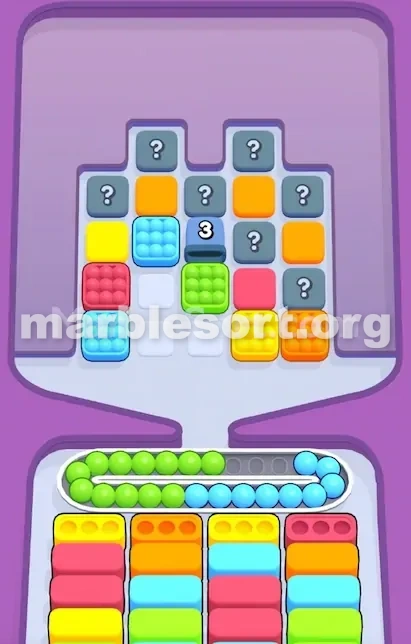
Why It Acts as a Blocker
Mystery Box blocks you three ways. First, it hides the marble color, so part of your plan is just missing.
Second, it can sit in front of the shade you need most, or block the only open route, forcing you to deal with it.
Third, when the level gives no safer path, it forces a risky drop you would rather skip.
In easy stages it is a small surprise. In hard ones it becomes a real piece of the puzzle you cannot ignore forever.

Mystery Box Versus Hidden Box
Do not lump them together just because both keep something secret — the secrecy works in opposite ways.
A Hidden Box typically displays its shade the moment a touching box clears. You get to uncover it first, then judge whether the drop is wise. There the aim is exposure.
The grey bag offers none of that relief. You release it, and only then does it name the color. Here the aim is to ride out what shows up.
That one contrast reverses the whole method: with one you set up the reveal, with the other you brace for the wreckage it leaves.

Best Time to Drop the Bag
The calmest window is when the floor below can absorb more than one possible shade. If yellow, blue, green, and pink all have open receivers, the bag stops being frightening.
The dangerous window is when a single color is doing the work. Crave orange yet nothing else fits? Should the bag serve up blue, those marbles loiter and jam the belt, and a follow-up bad tone begins to unravel the stage.
Ask three things before you poke: is the belt under half its capacity, do at least two bottom colors actually help, and can one receiver clear straight after the fall? A yes to all three tilts luck your way.
A no to every one means walk away from the pouch for now. Play it as a maneuver that demands spare room, not as a casual tap.

How It Floods the Conveyor
The bag only starts the trouble. When a bad shade drops, those marbles may circle the belt with no matching bottom box to enter.
Then you drop another box trying to fix it, but that second drop just adds more marbles on top of the first mess.
To avoid the spiral, do not treat Mystery Box like an ordinary move. Open it only when the board is ready for chaos, not because it happens to be sitting there.
A calm player opens it with room to spare; a rushed player opens it on sight and pays for it.

Tactics for Tough Stages
Tough stages weaponize the pouch against your sequence. It can rest next to helpful boxes, seal off a corner, or force a pick between a known safe shade and a blind release.
Follow this sequence: settle the visible matches first. Whenever a colored box can complete a bottom receiver, do that before you ever touch the grey pouch.
Never send it into a packed belt. Open the pouch only when it clears a route, then rewrite your plan the second the shade lands.
Pro tip — when the grey pouch is walling off two or more unseen boxes behind it, clear one obvious safe box first, then crack the bag while the belt still breathes. Do not tidy every easy move before opening it, though: stall too long and the bottom receivers may turn into worse tones, shrinking the bag's good outcomes.