





What Does the Marble Sort Elevator Do? Timing the Second Floor
Ask a stuck player what an elevator is and you will usually get: “a thing that gives me more boxes.” That answer is why elevators ambush people. It is not a bonus. It is a timer — and the whole game with an elevator on the board is deciding the exact moment you let it run out.
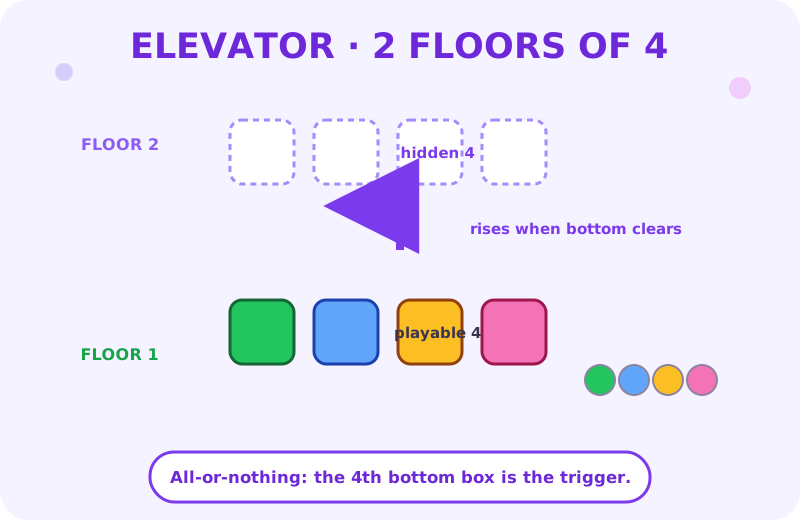
An elevator is a stack of two floors of four boxes each — eight boxes total. The bottom four sit on the board and are fully playable. The top four are hidden, waiting. The second floor only rises once you have cleared all of the first-floor boxes — and when it does, eight new demands can hit a conveyor that was comfortable with four. Rush it and the elevator feels like a punishment. Time it and the first floor is one of the most useful tools on the board.
This guide covers what actually triggers the rise, the “doorstop” trick that lets you hold the elevator down on purpose, and the raise-vs-delay decision you should be making on every tap.
The Misconception: It Is Not “More Boxes”
The instinct is to treat the elevator like any other box cluster and just start clearing. That is backwards. The first floor is not a set of boxes to drain as fast as possible; it is the only thing keeping the second floor down. Every first-floor box you clear without a plan is a step toward dumping four unknown boxes onto your belt. The right question is never “can I clear this box?” but “do I want the elevator to rise yet?”
What Actually Triggers the Second Floor
The trigger is exact: clear all four first-floor boxes and the second floor rises to take their place. It is all-or-nothing. Three of four cleared does nothing special; the fourth is the detonator. The moment it goes, the top four boxes — whose colors may be normal or hidden question-mark boxes — become live demands on a conveyor that may not be ready.
There is no third floor. After the second floor rises and its four boxes clear, the platform itself is gone. The elevator is a two-stage mechanic, and all the skill is in the seam between the two stages.
The Doorstop Trick
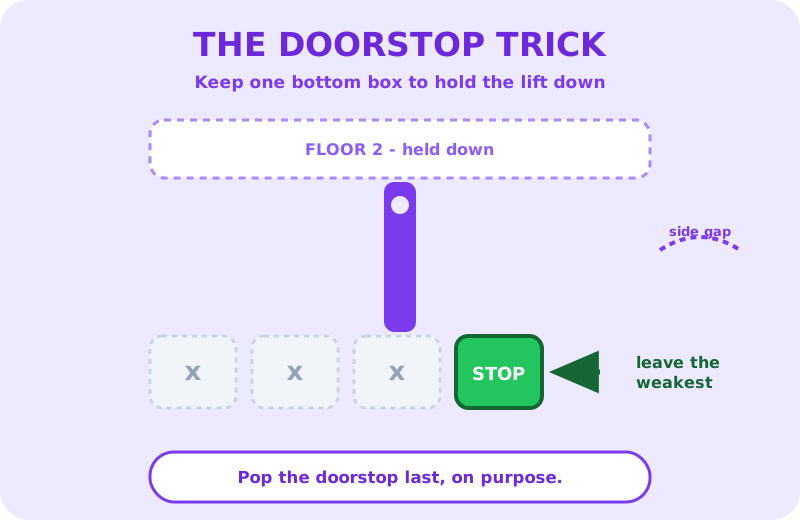
The single most important elevator habit is the doorstop: deliberately keep one first-floor box — your least useful one — sitting there so the elevator cannot rise while you still need the board open.
Why it works: clearing the first to third boxes opens temporary gaps (“windows”) that let you reach boxes outside the elevator, but as long as one box remains, the floor does not rise. So the first floor becomes a tool you control:
- Clear the first-floor boxes that help you right now.
- Stop and leave the weakest as a doorstop.
- Use the windows to drain side boxes, finish other colors, and free belt space.
- Only then pop the doorstop, so the second floor rises on your terms.
If you clear all four reflexively, you never get this middle phase at all — and you turn a controllable mechanic into a surprise.
Raise vs Delay: the Decision on Every Tap
Here is the short scorecard. Raise the second floor when:
- The side paths you needed are already finished.
- The colors likely above are useful, or a bottom box is waiting on them.
- The conveyor has room to absorb the new four.
- The remaining first-floor box is now blocking progress.
Delay (keep the doorstop) when:
- You still need side access through the windows.
- The belt is crowded.
- The colors you can see do not match what the bottom wants.
- A first-floor hidden box has not revealed its color yet.
- Clearing it would feel automatic rather than chosen.
This is the same discipline the conveyor space management guide teaches: prefer belt space over an “efficient” tap. The elevator simply makes the cost of ignoring that rule visible all at once.
How Rare the Elevator Actually Is
Elevators are not common, which is part of the trap — you meet them rarely enough that the habit never sticks. Counting keyword mentions across all 805 of our level solution entries:
- The elevator appears in only 12 levels total — about 1.5% of the set.
- Its debut is Level 254.
- Notably, 4 of those 12 land in the 601–700 band (Level 603, 609, 617, 656), so the mechanic is disproportionately late-game — it shows up when your belt management is already under maximum pressure.
Because you will not get daily reps, having one explicit rule — hold a doorstop — is worth more than intuition here.
Frequently Asked Questions
How does the elevator work in Marble Sort?
It is two floors of four boxes each. Only the first floor is playable at the start. Clearing all four first-floor boxes raises the second floor into view. Once the second floor clears, the platform disappears — there is no third floor.
When does the second floor rise?
The instant you clear the last (fourth) first-floor box. Three of four cleared does nothing special; the fourth is the trigger, so it is all-or-nothing.
What is the doorstop trick?
Deliberately leaving your least useful first-floor box in place so the elevator cannot rise while you still need side access and belt space. You pop it last, on purpose.
Should I clear the elevator as fast as possible?
No. The first floor is the only thing holding the second floor down. Clearing all four reflexively dumps four unknown boxes onto your conveyor. Keep a doorstop and raise it only when the belt is ready.
Are elevators common?
Rarely. Across our 805-level index they appear in only 12 levels, first at Level 254, with a late-game lean toward the 601–700 band.
Where to Go Next
If multiplier tunnels feel similar, they are — both reward you for not triggering the burst early; the multiplier gates and tunnels guide pairs well here. Drill the seam on the Level 254 solution, see the exact mechanic summary on the elevator feature page, and keep a booster in reserve from the boosters guide for the moment the second floor lands badly. For the underlying discipline, re-read the golden rules cheat sheet.