

Video Guide

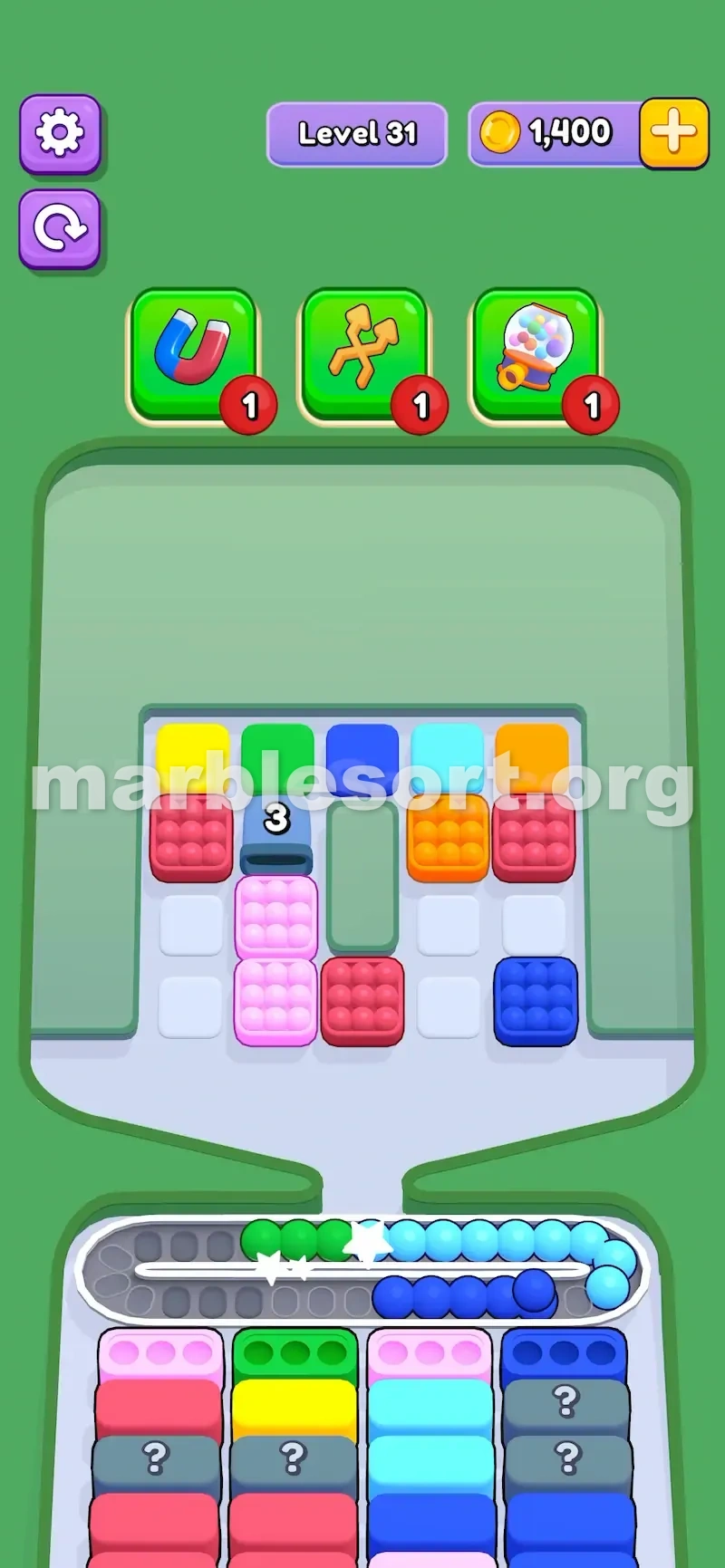
Mystery Boxes: Playing Blind at the Collection Row
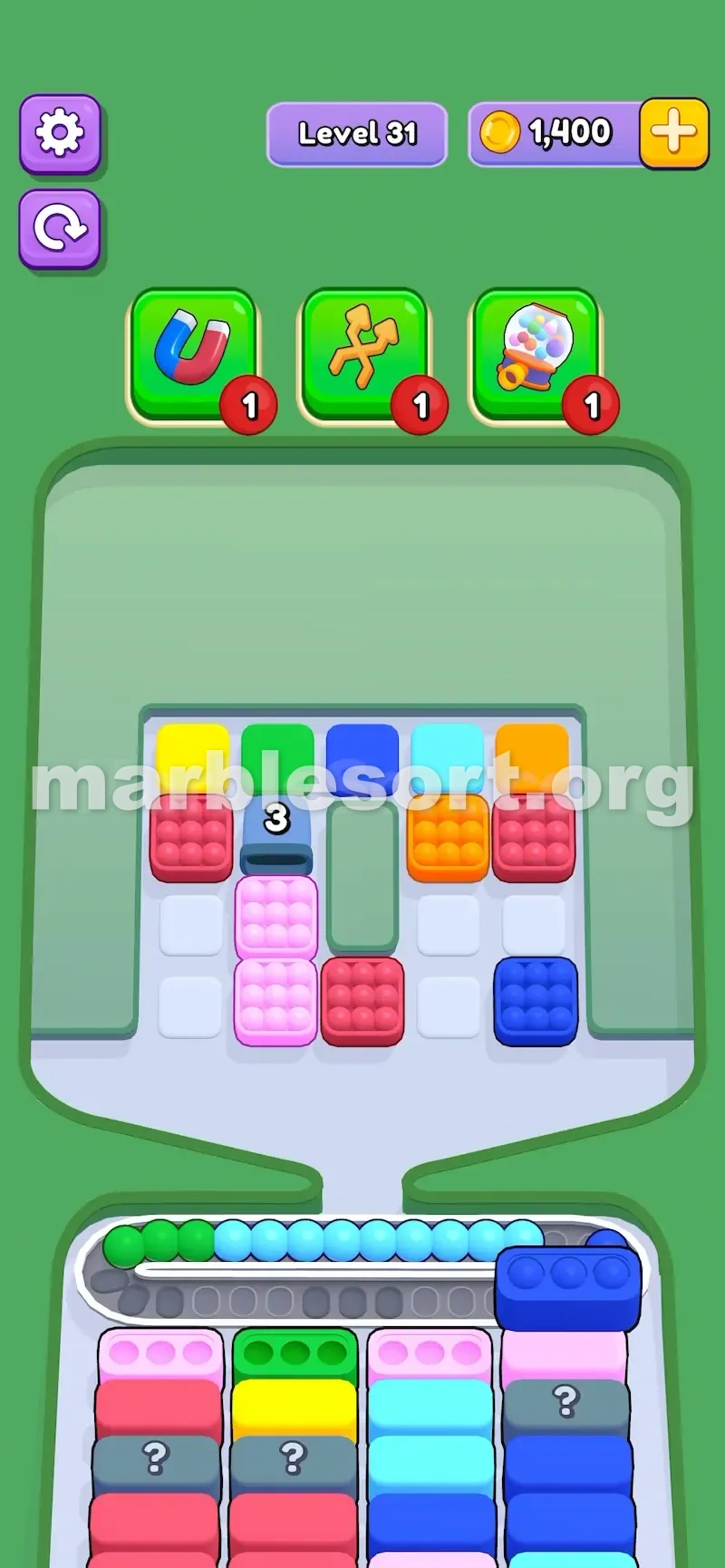
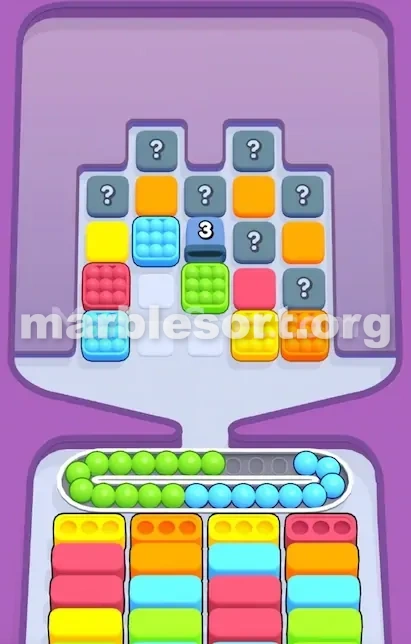
A grey slot finally drops its disguise, shows a shade, and the entire stage reorganises itself around that one piece of news.
That delayed reveal is the whole point of the obstacle. It conceals what a collection slot is asking for until the container above it disappears, which means you are making decisions with a hole in your information.
An ordinary receiver announces its requirement immediately — orange slot, send orange marbles. A masked one gives you nothing. Red, green, pink, cyan, yellow, any of them could be underneath, and you will not know until later.

What the Grey Question Mark Is Hiding
Marbles pour out of the upper containers, drift through the middle of the board, ride the moving track, and finally get filed into whichever receiver matches their shade.
Those receivers are what decide which shades you can safely release at any given moment. Masking one of them removes a target from that calculation.
The rule behind it is short: the shade appears only once the container resting directly above has been emptied. Whatever sits on top is functioning as a lock.
Deal with that upper container and the slot below stops being a guess. Until then, every release you make is a bet placed with incomplete information.
The Unmasking Sequence in Practice
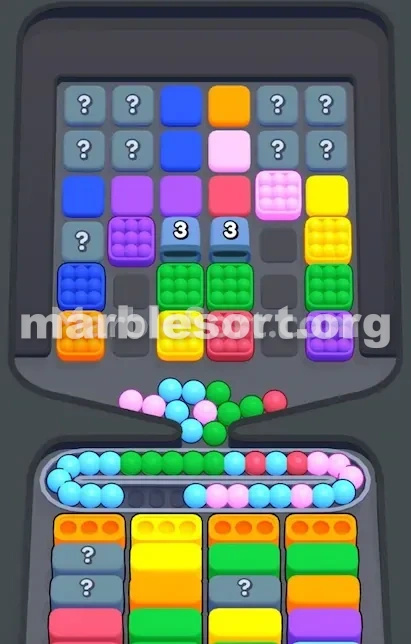
Start by locating the grey question-mark slot in the receiving row, then look at whatever is stacked over it. While that stack remains, the shade stays sealed.
Feed the correct marbles into the visible container above, keep going until it fills, and it will vanish from the board.
With the lock gone, the grey marking flips into an actual shade and you finally know what that receiver has been waiting for.
Then move quickly. Difficult stages love to time the reveal for a moment when the track is already crowded, so noticing the new shade and reacting immediately is what separates a recovery from a jam.
Hidden Target Versus Hidden Source
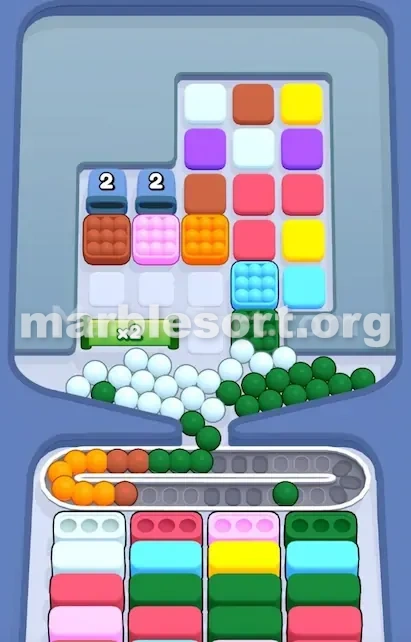
This obstacle and the covered container upstairs both wear the same grey question mark, yet they interfere with completely different halves of the stage.
The covered container upstairs conceals a marble source and opens up once a nearby route clears. The masked receiver downstairs conceals a destination and opens up when the container above it goes.
One is telling you that you do not yet know what supply is sitting there. The other is telling you that you do not yet know where certain marbles are meant to end up, and that second gap is usually the more dangerous of the two.
With a destination missing, every release carries extra risk. You can dump a shade that has no open receiver, sit on a shade that turns out to be urgently needed, or waste track space simply waiting for the grey slot to speak.
Why Stacked Reveals Break Players
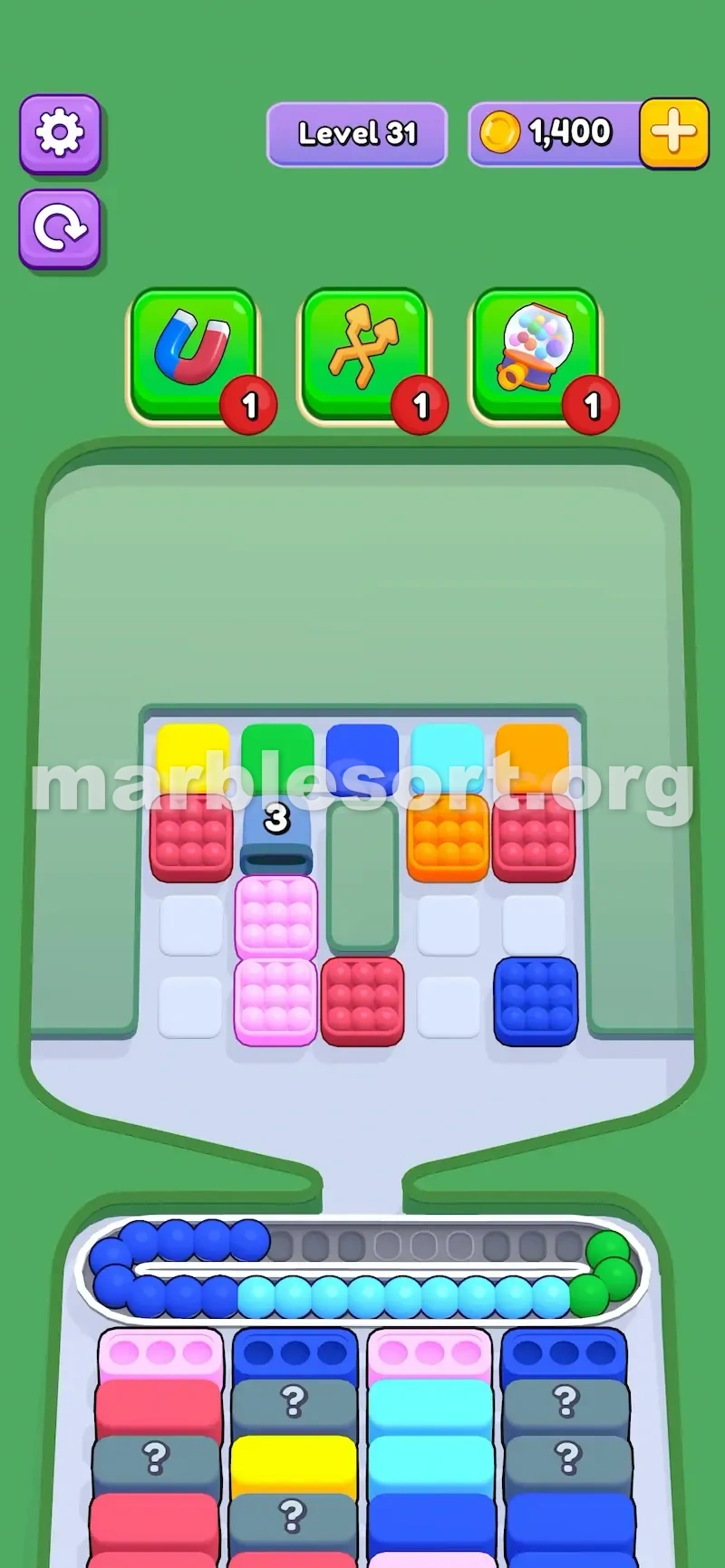
The pressure here comes from stripping information out of the receiving row. Sorting shades is no longer the whole job.
Brutal stages will line up several masked slots along the bottom simultaneously, and that sets off a cascade: not every target is readable, readable containers have to fall before the masked ones speak, and a freshly revealed slot may demand a shade buried deep in the upper containers.
This is the point where people panic and start firing marbles at random. Random releases produce track clutter, and track clutter is what actually loses runs.
The disciplined line is to bank the known clears first and treat every unread target as a trap until it proves otherwise.
A Reliable Order of Play
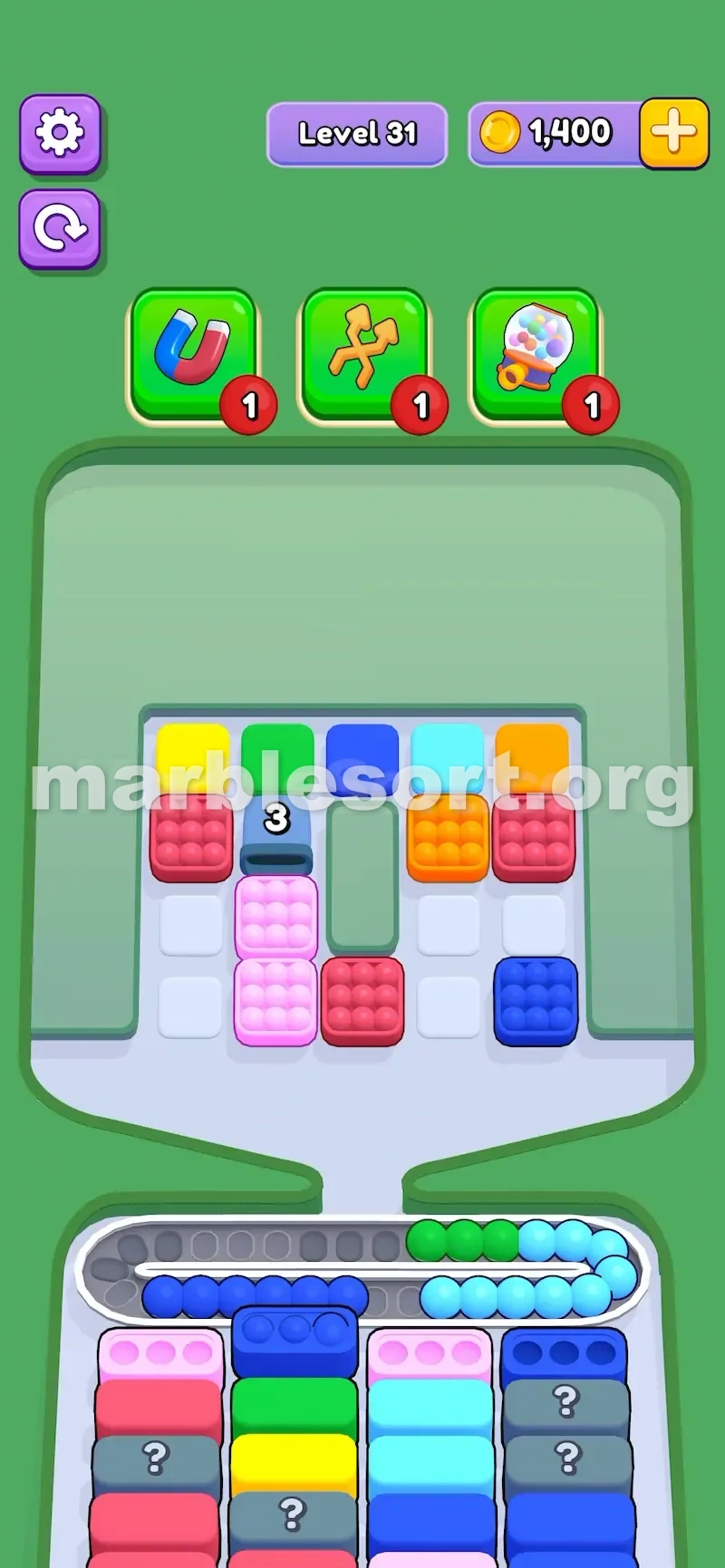
Guaranteed progress comes from receivers you can actually read, so if a known pink, blue, green or orange slot can be finished, finish it before gambling near a masked one.
Do not spread yourself thin across every stack. Choose one stack sitting above a masked slot and empty it — a single confirmed shade buys you real control.
Never flood the track with a shade that has no visible receiver, and before each release glance at which shades are available up top and which receivers can actually take them. The quickest tap is very rarely the best one.
Shades that appear in more than one upper container are worth protecting; they frequently become the answer immediately after an unmasking, so avoid burning them unless they clear a visible receiver right now.
Boosters and the Half-Second Pause
Save boosters for genuine emergencies. The magnet earns its keep right after a reveal, particularly when the matching shade is already scattered across the track.
The shuffle is the better call when the receiving queue is simply bad and you need a different arrangement, while the cannon is the panic button for a track on the edge of overflowing.
When three or four masked slots line the bottom, pick the stack with the least demanding container above it and clear that one first. Opening a single hidden target early beats leaving four stacks almost done and achieving nothing.
One scrappy trick worth keeping: if the newly revealed shade is already doing laps out there, lift your finger for half a beat and let those marbles roll into place. Most losses to this obstacle come from tapping too much. Pause, give the track room, then send the next matching set.