

Video Guide

Arrow Boxes: When Order Matters More Than Colour
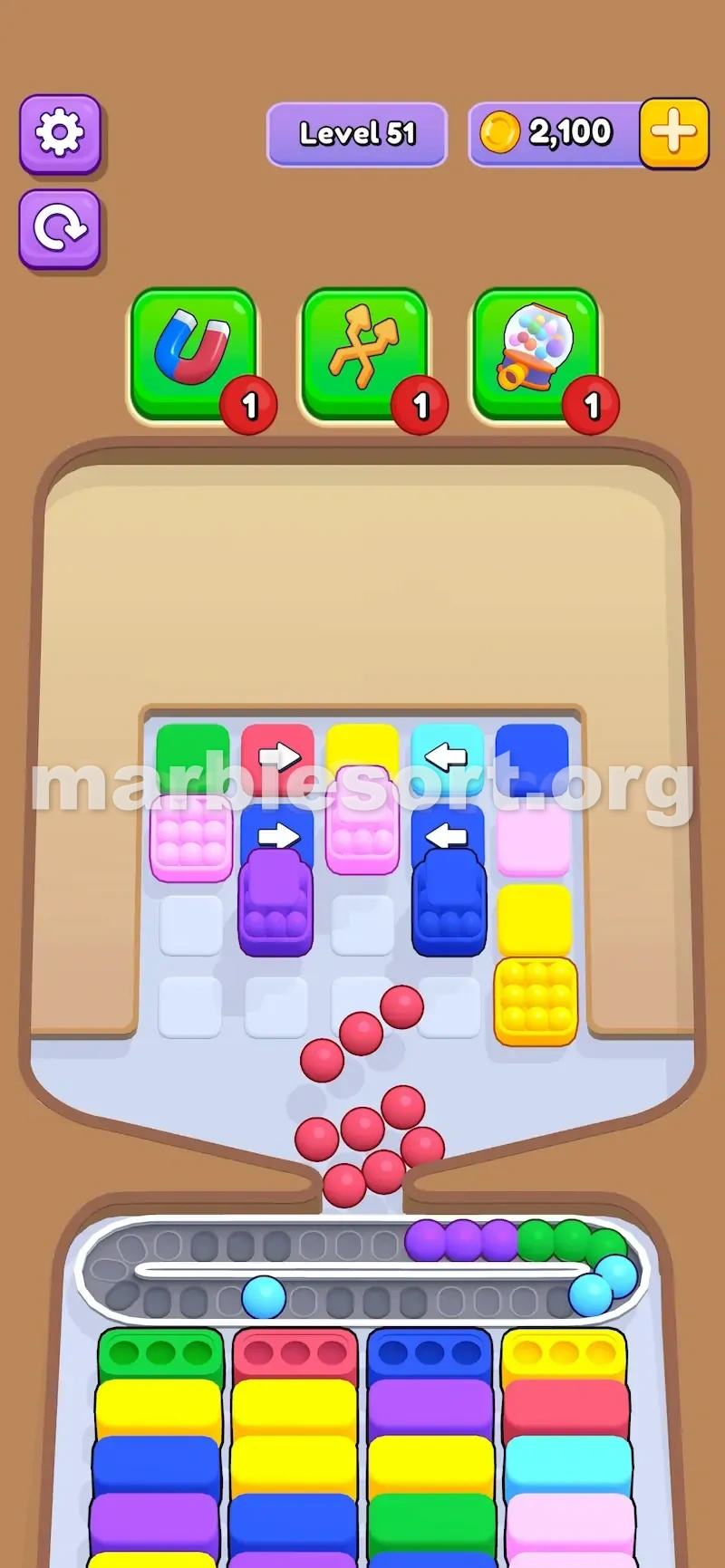
The pink marbles are exactly what the floor wants, yet the pink box is wearing a little arrow and refuses to move.
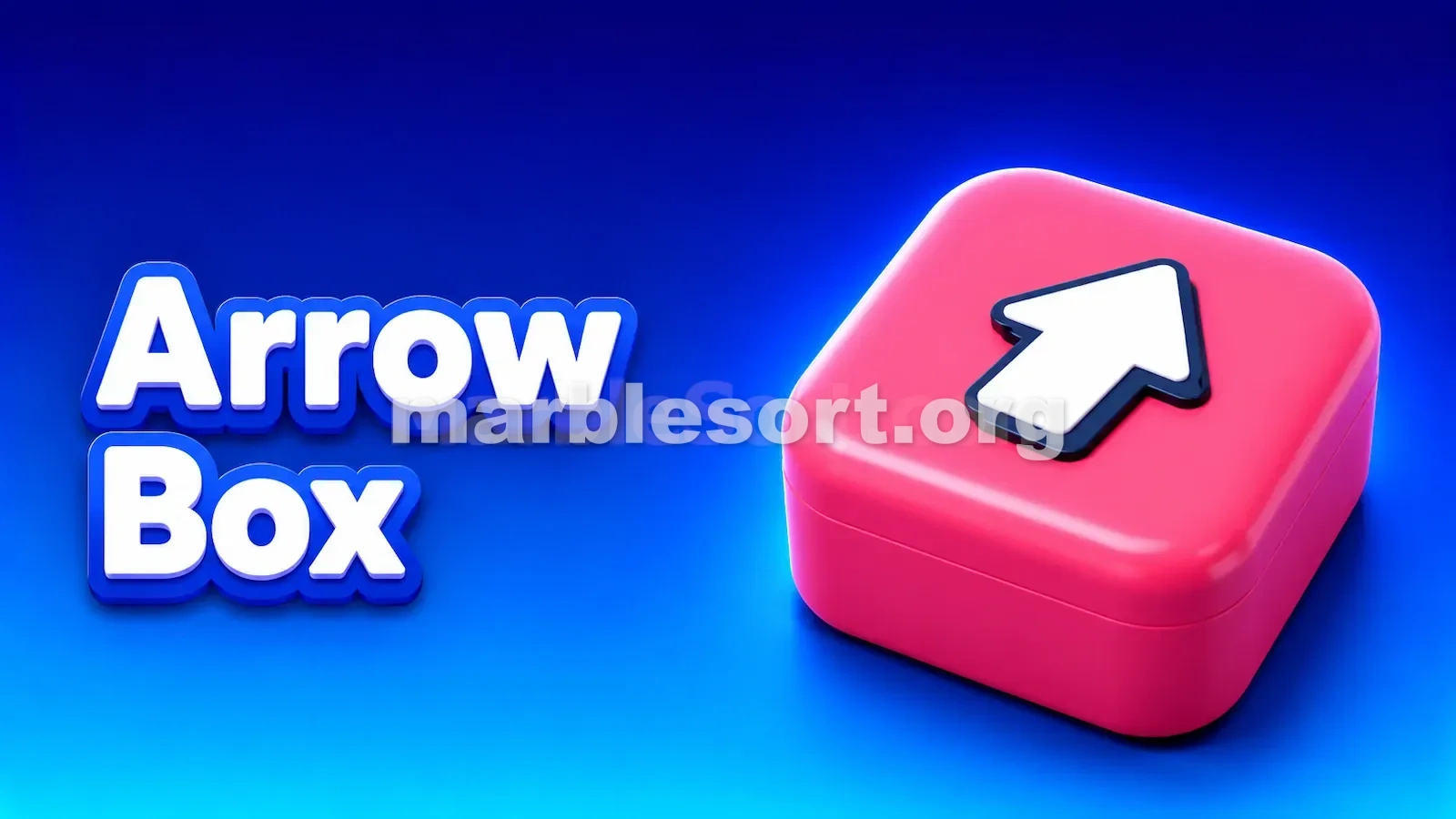
That sign sits on top of an ordinary coloured box and can face any of the four directions. Whichever way it faces, it names the box that has to be released before this one wakes up.
With a single sign on the board the idea feels harmless. Trouble starts when the stage lines several of them up, parks the shade you actually need at the tail of the run, and makes the first release hand you something the belt cannot use.
What the Sign Is Really Doing
It seals off a coloured box until the box its sign is aimed at has already been sent down.
One sentence covers the whole rule: whatever the sign targets goes first. Everything else is detail.
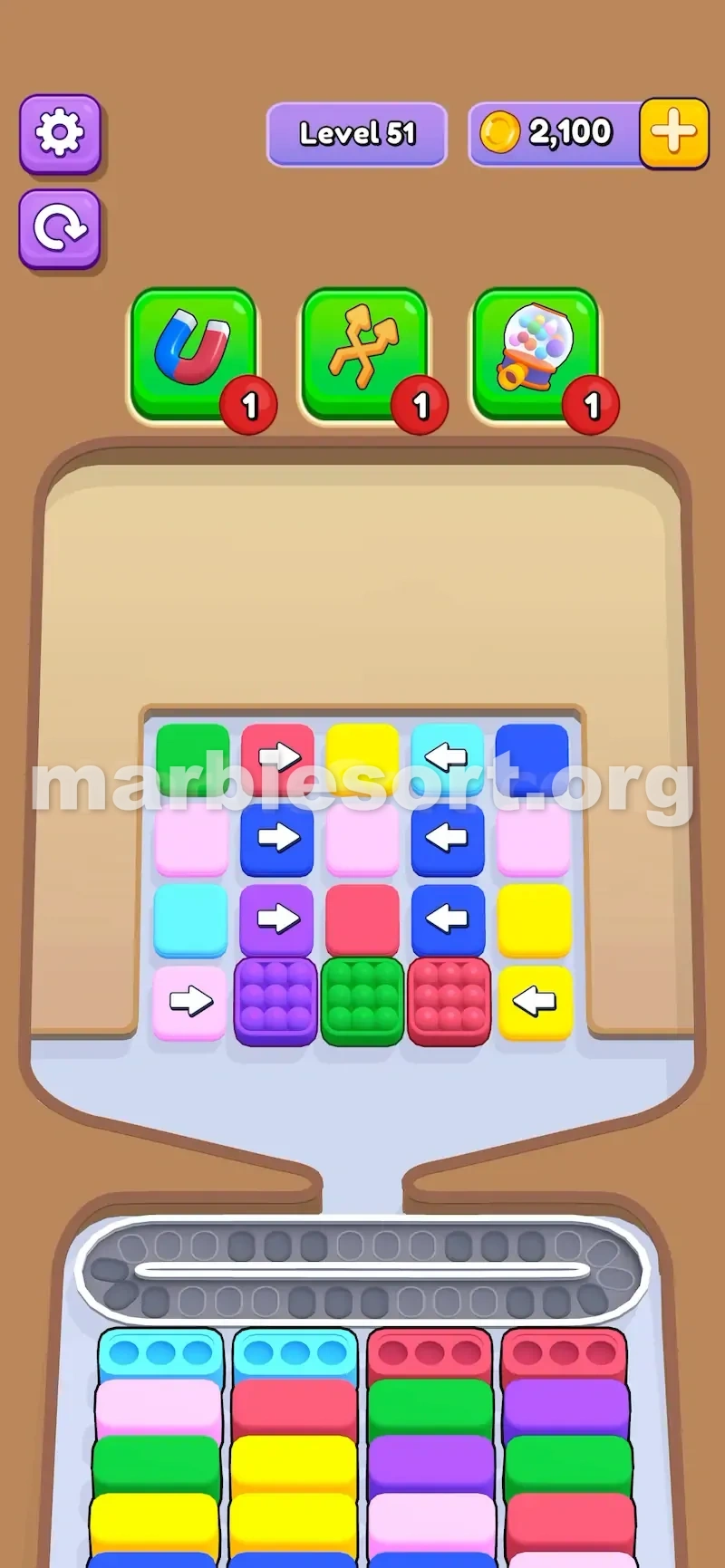
Picture a blue box with the sign facing left. Look one step to its left, release that neighbour, and the blue box is yours. Turn the sign to the right on a pink box and the neighbour on that side becomes the requirement instead.
Signs facing up or down behave the same way with the box overhead or the box beneath. The message never changes: this one is waiting on that one.
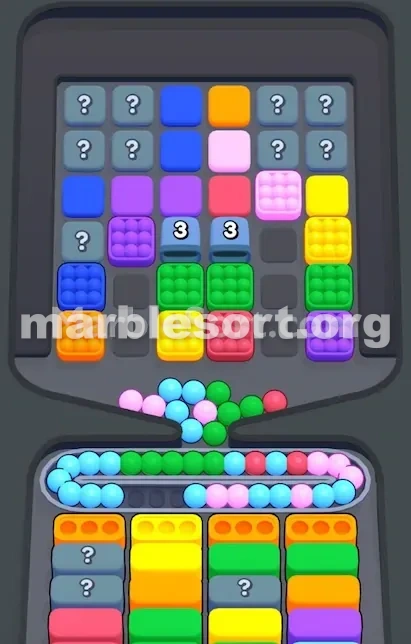
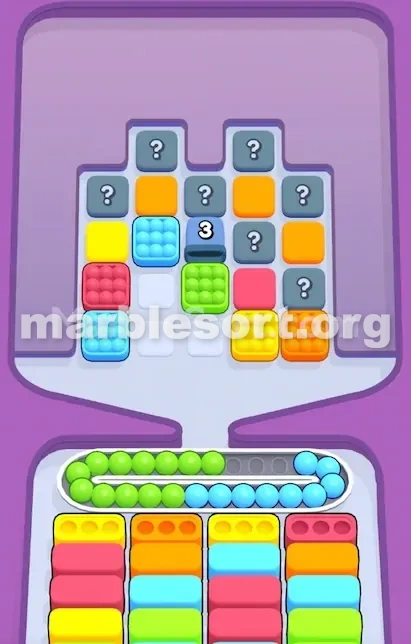
How Arrows Rewrite Your Decisions
A plain box only asks one thing of you: is this shade useful right now, and is there belt space for it?
A signed box adds a second question that comes before the first — what does this sign demand, and can I afford to pay it? That second question is where runs get lost.
A nasty setup routinely makes you release a shade that matches nothing open at the floor. Those marbles then circle the belt, eat space, and simply sit there.
Repeat that a few times and the belt seizes up before the marbles you were chasing ever arrive. Which is why these boxes deserve to be read as a small puzzle tucked inside the stage rather than as ordinary boxes.
Why This Counts as a Blocker
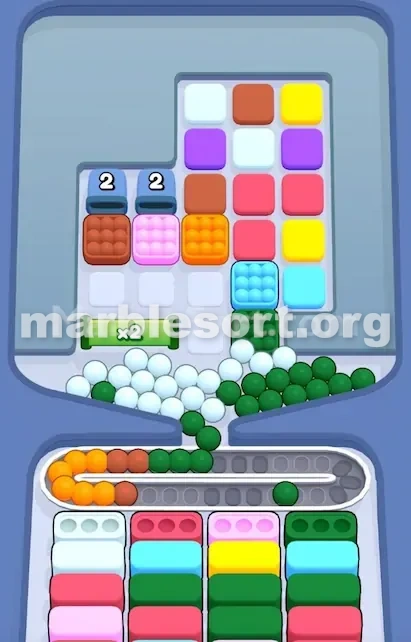
Other obstacles take away different things. A covered box takes away knowledge because the shade is unreadable. A question-mark slot keeps the floor target secret until later. A linked pair floods the belt with surplus marbles.
This one takes away your freedom to act at the moment you choose.
Everything about the box is visible. The shade is obvious, the need is obvious, and the sign still says another box has to fall first.
That turns every arrow on the board into a scheduling exercise. You are no longer only matching shades; you are working out an order of operations while the belt keeps moving.
Reading a Chain Before You Commit
Tough stages rarely give you one sign. They give you a run: this box waits on a second, the second waits on a third, and the payoff box sits right at the end.
Nothing at the tail can be released until the whole run has been unpicked in the right order.
Take a green box pointing at a blue one, with blue pointing at yellow and yellow pointing at pink. Green is the shade you came for, but the stage is quietly demanding pink, then yellow, then blue, and only then green.
The risk is obvious once you spell it out: those three forced releases may do nothing for the slots currently open. Pile up enough of that and the stage collapses under its own clutter.
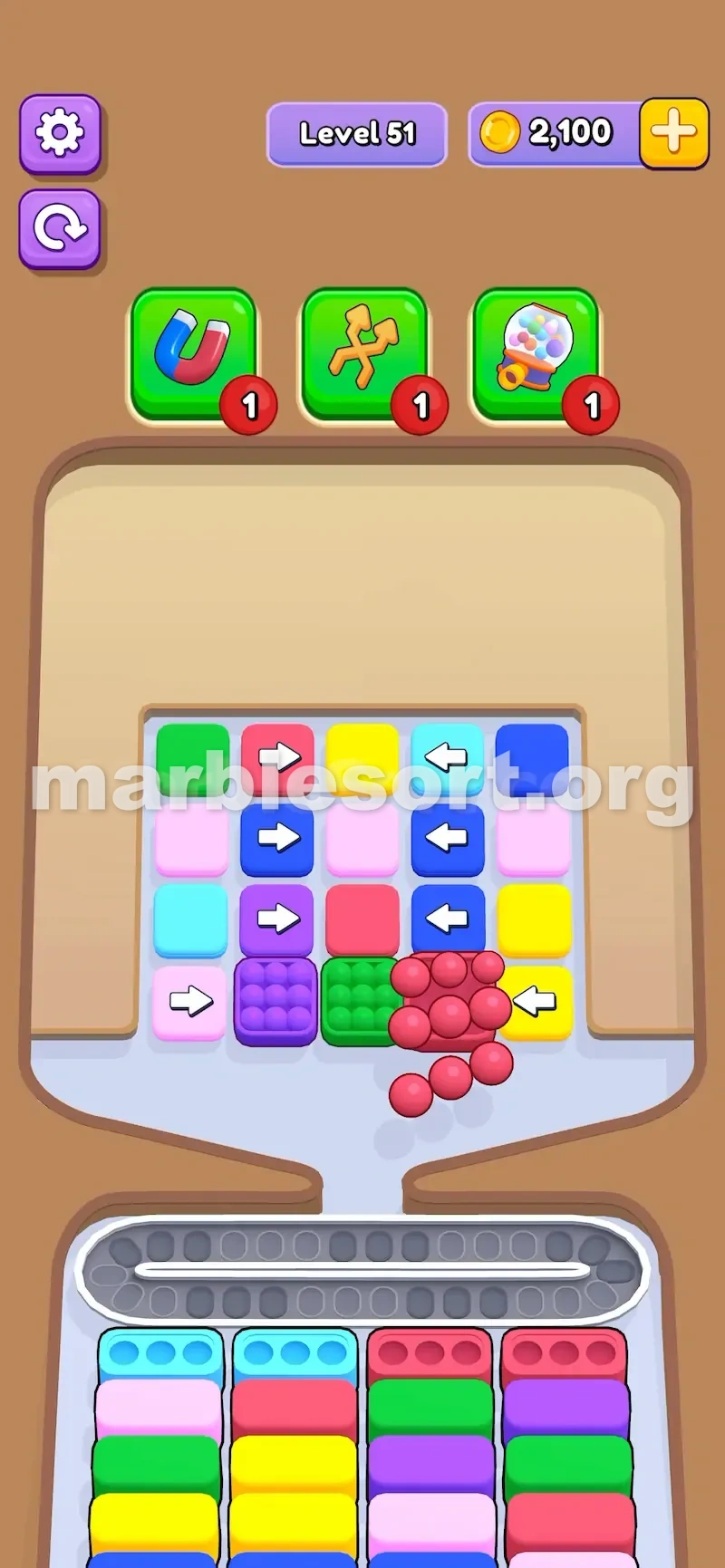
The Order That Actually Works
Read the floor before anything else and list the shades that can genuinely be absorbed at this moment.
Then follow the sign to its target. If that target is itself locked, keep tracing backwards until you land on a box with no condition attached — that is your real starting point.
Tidy up the free matches before you touch the run. Any plain box that can finish a floor slot should go now, while it costs you nothing.
Only open the run once there is genuine room, and expect the first release or two to be junk. When that junk lands, stop and clear a matching shade before you continue instead of pushing straight through.
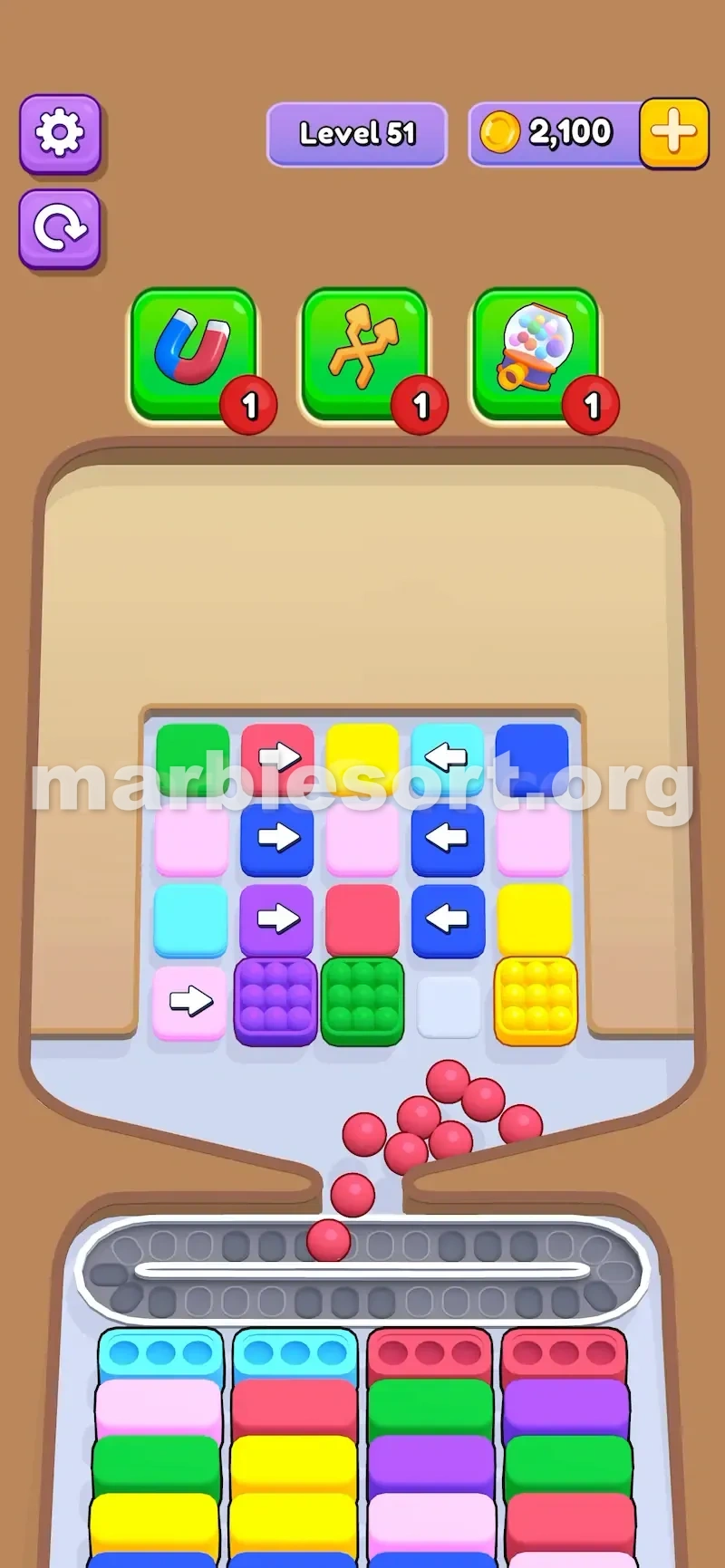
Mistakes That Sink Arrow Stages
The classic error is hunting a shade without pricing what its sign will cost. Someone spots the red box they need, taps around until it frees up, and quietly dumps three other shades onto the belt in the process.
The red marbles are available at last, and there is nowhere safe left to put them.
Running two chains side by side is almost as bad. Unless the stage is unusually generous, that fills the belt with shades you have no home for.
Third comes ignoring the floor entirely. When the open slots do not want the shades a run will force out of you, the correct move is to wait — the sign is not going anywhere, but your belt space is.