

Video Guide
Locked Pallet: Keys Without a Color Match
The right shade is in your hand, the target box sits below, and the belt is already getting tight.
This feature is a nasty wall because it never stops you from tossing marbles down.
You can keep poking top boxes, load the conveyor with perfect colors, and still lose — since the bottom box you need is sealed shut. The game ignores that your plan was sound; while the lock holds, that color will not finish.

What Locked Pallet Is
A Locked Pallet stands guard over the colored boxes at the base — the ones you would normally fill with matching marbles from the belt.
You read the colors sitting low, then drop the matching top boxes. When a bottom box gathers enough marbles and clears, the next box in that column climbs up.
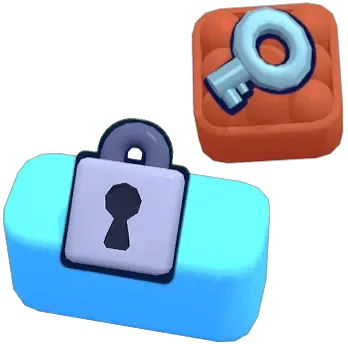
This mechanism snaps that chain. A bottom box may already be in view, yet with a lock on it, it cannot clear yet — you must first drop a top box that holds a key.
A key may be grabbed before its lock even reaches the live row. When that occurs, the key parks in the queue. Once a locked box lands in the first row of a bottom column, the stored key frees it. The real puzzle is not "Where is the key?" but "Which lock will this key spring?"
Locked Pallet Versus Locked Gate
Both features share a motif: keys open locks. Yet they cause very different pain.
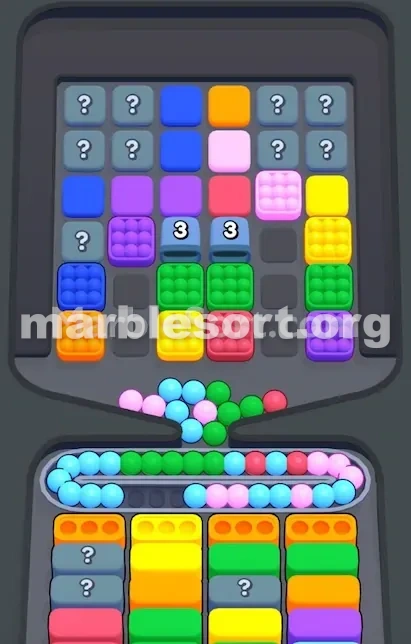
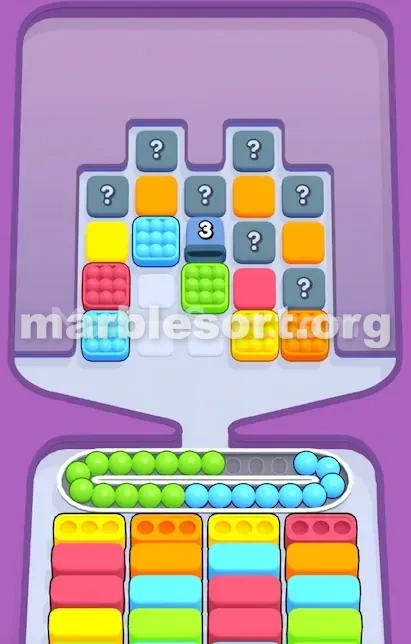
A Locked Gate seals off part of the play field and stops you from dropping some top boxes until it opens; mostly its key and lock are color-tied, so a given colored key frees the matching gate.
Locked Pallet does not block the top boxes at all. It blocks your power to clear the base boxes, which stings more — marbles still drop, but they may have no good home.
In this game clearing is survival. A feature that blocks clearing wounds deeper than one that only blocks dropping.
How Locked Pallet Releases Step by Step
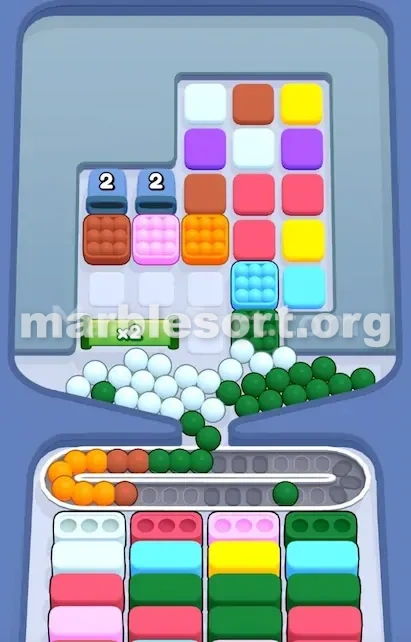
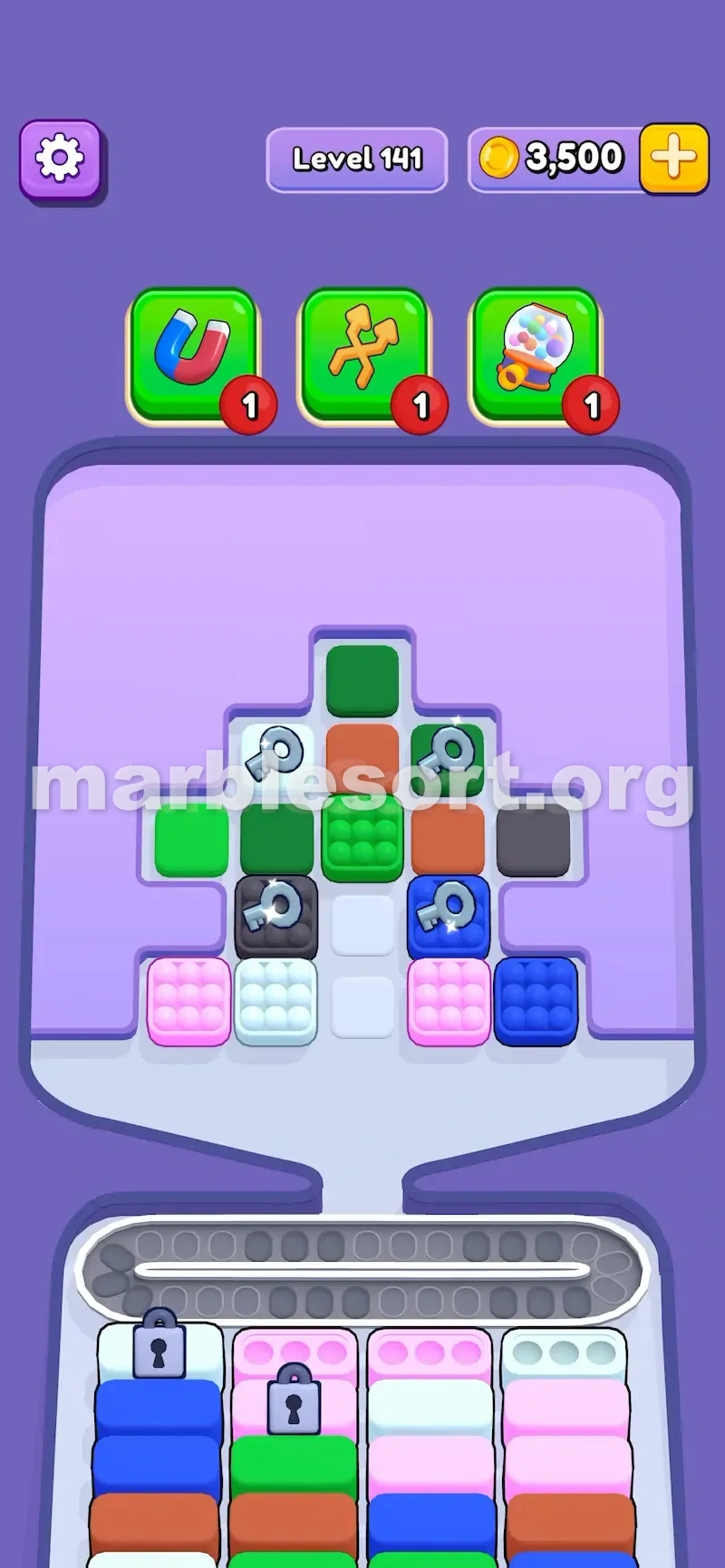
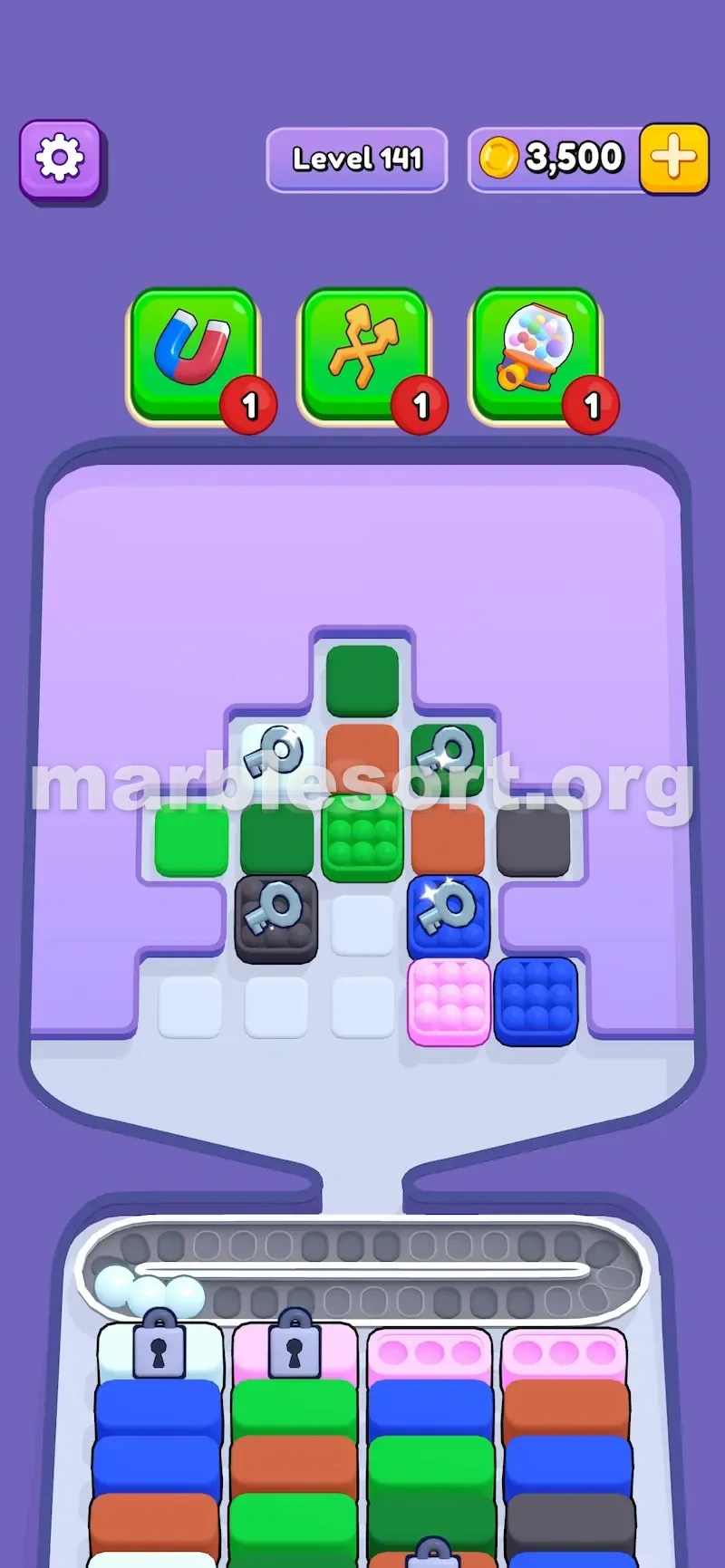
A lock rests on a bottom box that cannot finish yet. A key appears on one or more top marble boxes, and those must be dropped to grab it.
When you drop a box holding a key, the key slides into the queue. Should no locked bottom box be live in the top row, the key simply waits.
Once a locked bottom box climbs to the clearable row, the queued key frees it.
With the lock lifted, push that box up the list. Do not leave it idle while the conveyor piles up.
Why Locked Pallet Turns Nasty
Suppose the blue bottom box is locked. The blue marbles you drop cannot finish it, so they keep looping the belt, hog space, shove other colors, and spoil the next move.
All at once the stage stops being a color match. It becomes about freeing the right base boxes before you pour too many marbles into a dead end.
That is what makes this feature bite harder than Hidden Box or Mystery Box. It shows you the fix, then declines to let you use it.
Smart Play on Locked Pallet Levels
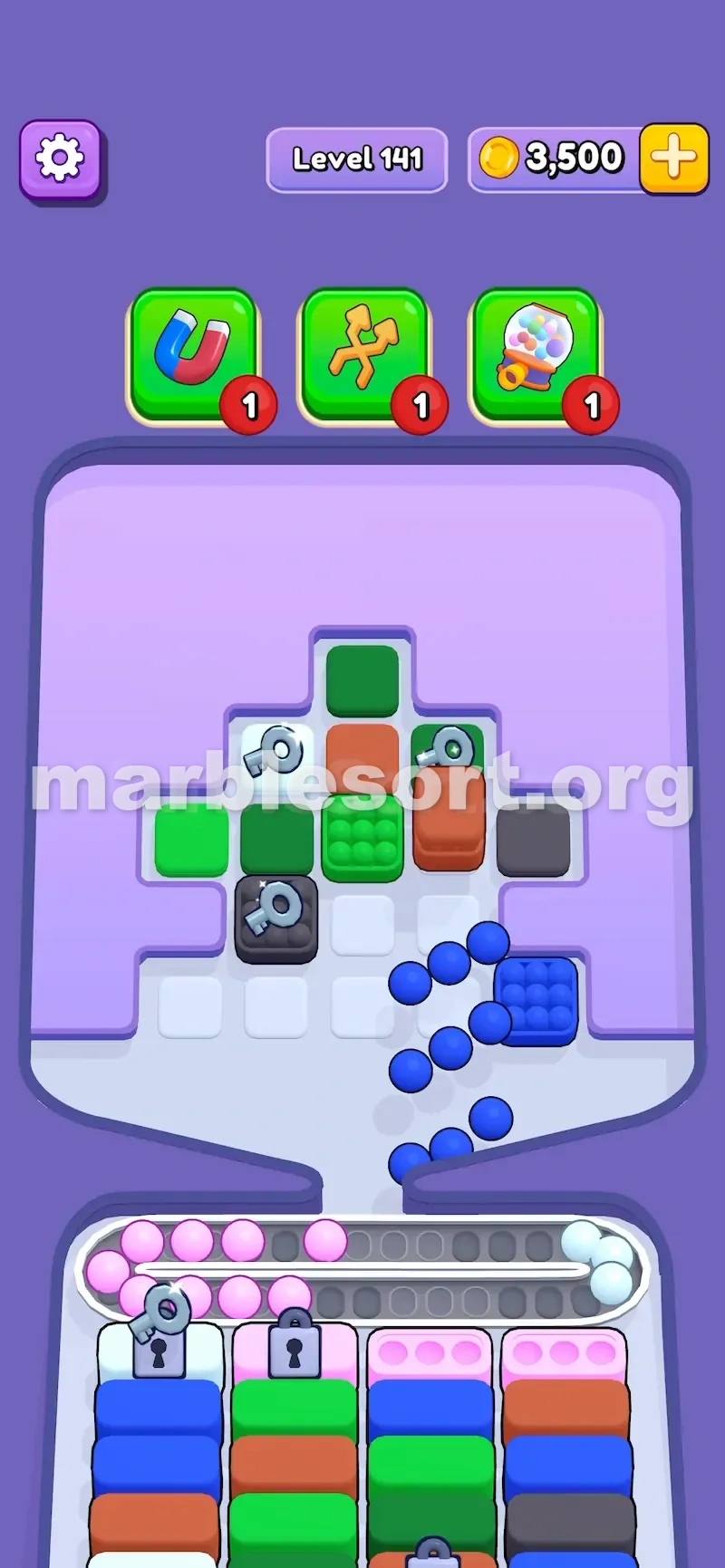
Quit acting like every base box is free. Clear unlocked ones first when they are safe; if one can wrap up fast, do it.
Sitting too long before grabbing a key is among the quickest routes to a loss. Once the belt is half full, repairing a locked base row turns tough.
Never dump a huge stack onto a sealed color. A nine-marble box turns ugly if its target is shut. Drop smaller, safer shades while you line up the key.
The lock that counts is the one nearing the live row; a lock buried two deep is not urgent yet. Because keys are universal, do not read them as color tools, since the next lock in line springs — so build your plan around that.
Common Mistakes to Avoid
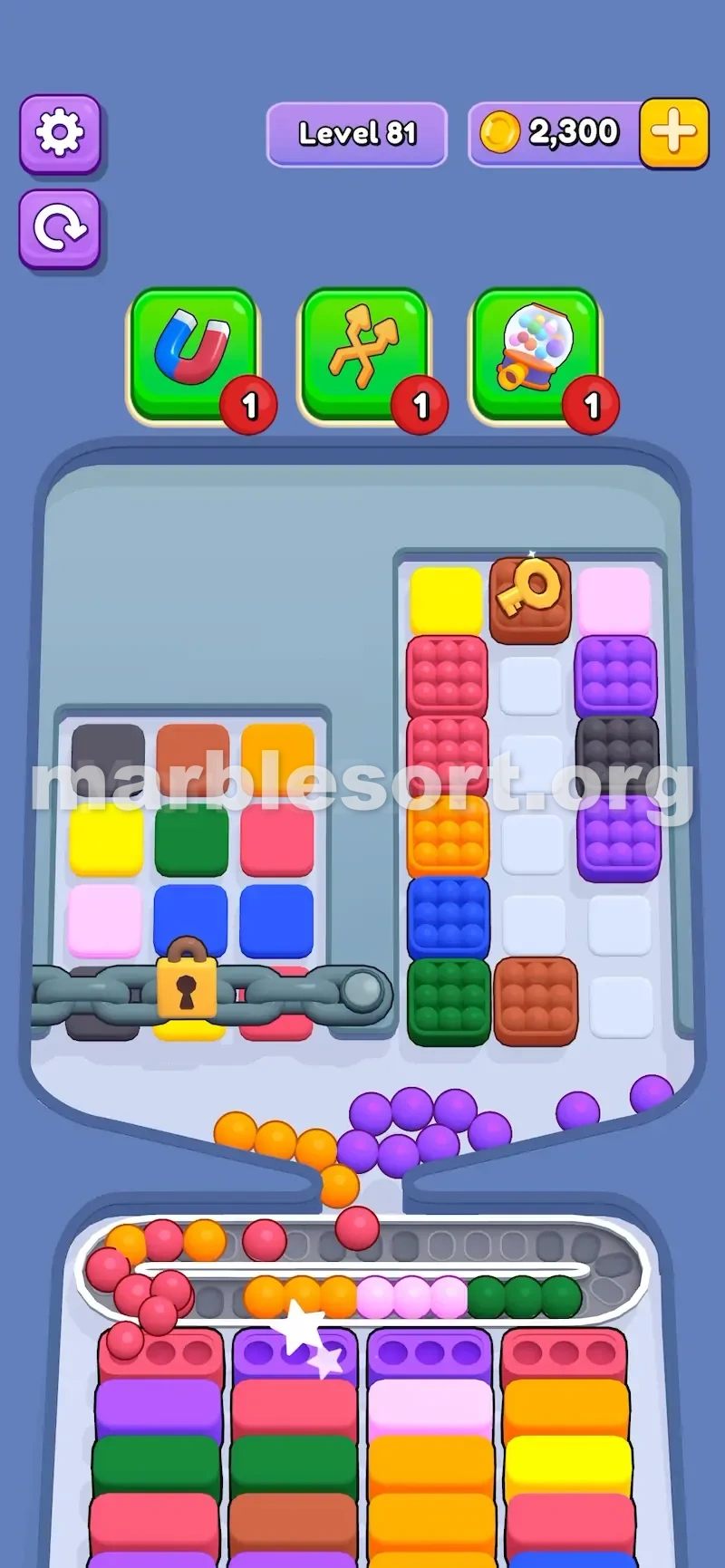
The worst slip is feeding marbles to a locked box merely because the hue matches. That move looks fine for a beat, then the belt proves otherwise.
A second slip is snatching every key too soon without reading the base order. A queued key only helps if you know the lock it will spring; blind stacking may free locks in an order that solves nothing for your present belt mess.
Players also skip side columns far too often. On many tough stages the lock that ruins the board is not centered — it hides in a side column, behind a color you planned to clear later. Side locks can jam the whole base row if they block a shade that keeps arriving from above.
Pro tip — when a key is on hand, do not always spend it right away. First see which base column is closest to revealing a locked box in the live row. If that lock guards a color you do not want yet, clear one small unlocked box and let a better lock drift into place. It feels strange since most players see keys as panic buttons. Here keys are traffic cops: spend them too early and a wrong lane opens; spend them one beat later and the whole board clears at once.