

Video Guide

Color Panels: When the Door Only Cares About One Shade
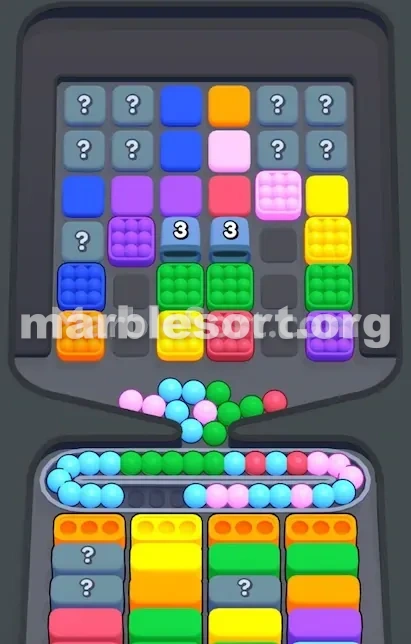
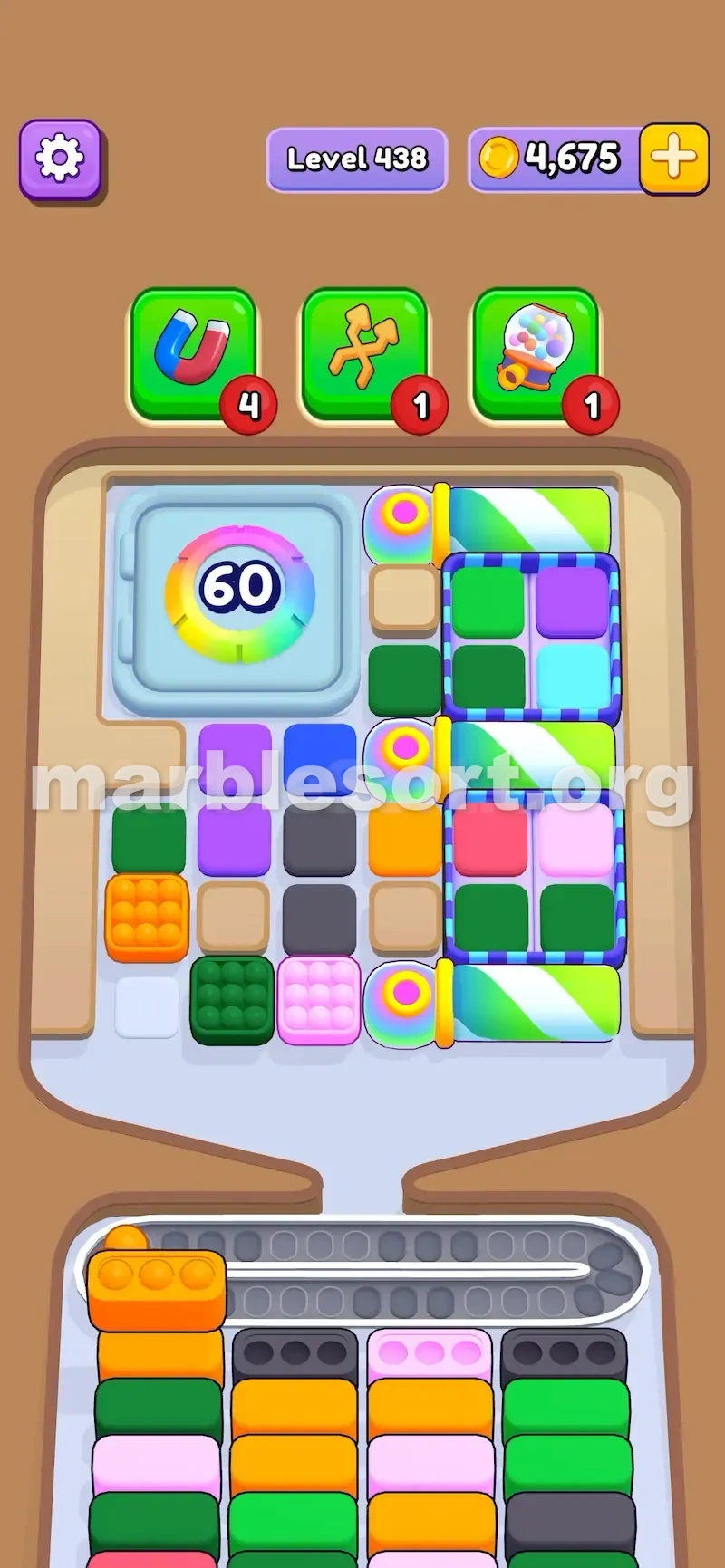
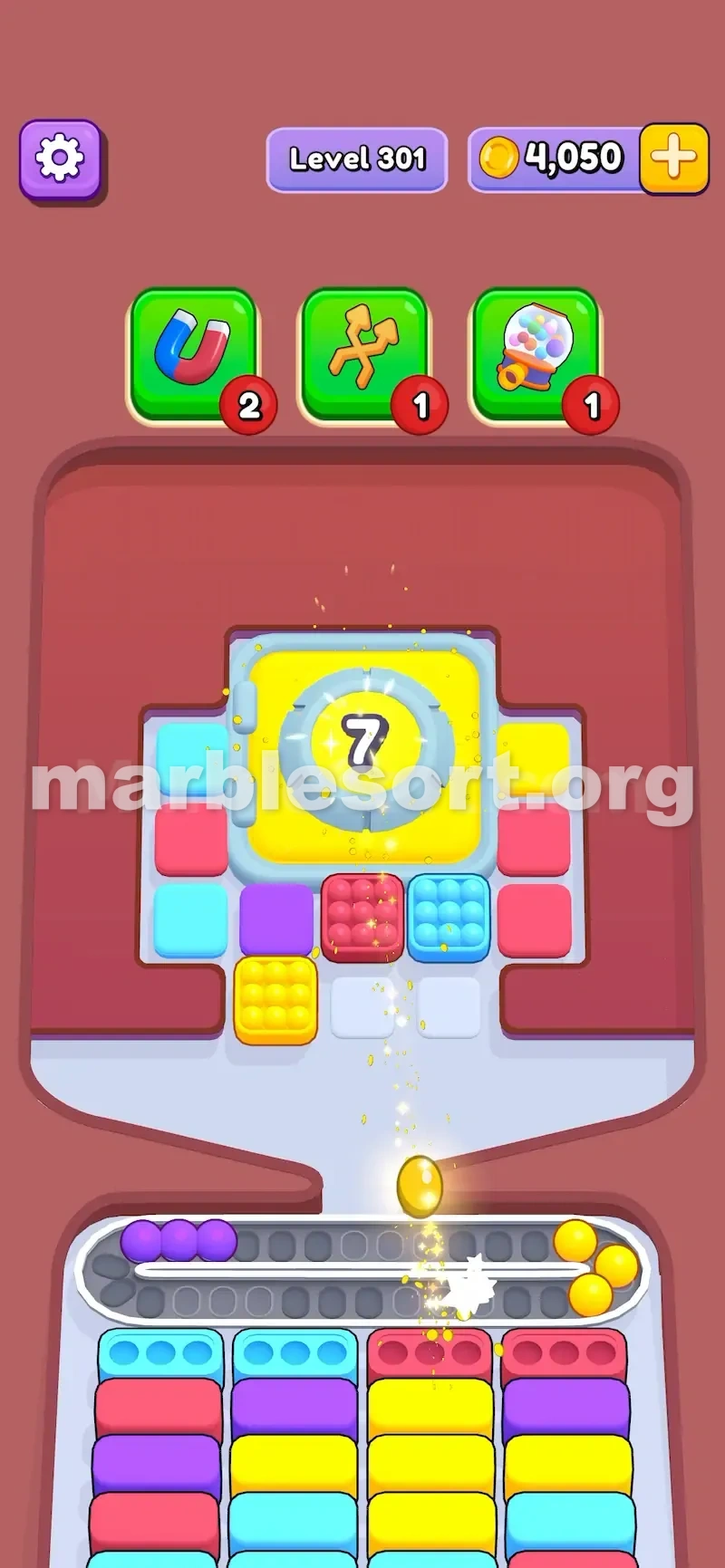
A Color Panel looks like a regular gate at first glance. It shows a color and a number, but that number is picky: it only cares about one shade of marble.
Miss that detail and you will burn turns clearing boxes that do nothing for the door. The panel stays locked, the board gets cramped, and the run ends fast.
This guide explains how the picky counter works, why it punishes random tapping, and how to open the panel without flooding your belt.

What Makes a Color Panel Different
In normal Marble Sort panels, any completed bottom receiver lowers the gate. The color does not matter — red, blue, green, they all push the counter down.
A Color Panel changes the rules. Its counter drops only when the bottom box you clear matches the panel's own color. If the gate is orange and says 6, six orange receivers must open before it budges.
That difference turns every non-target clear into a setup move instead of a scoring move. You still need those clears, but they do not unlock the door.
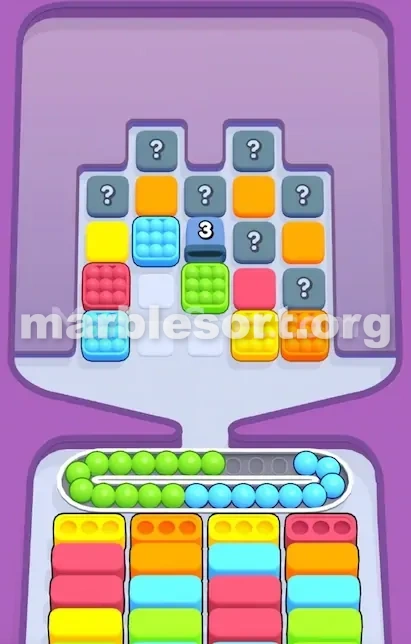
How the Counter Really Ticks Down
Look at the panel and read two things: the color and the count. The color tells you which marble family the gate wants. The count tells you how many receivers of that family must open.
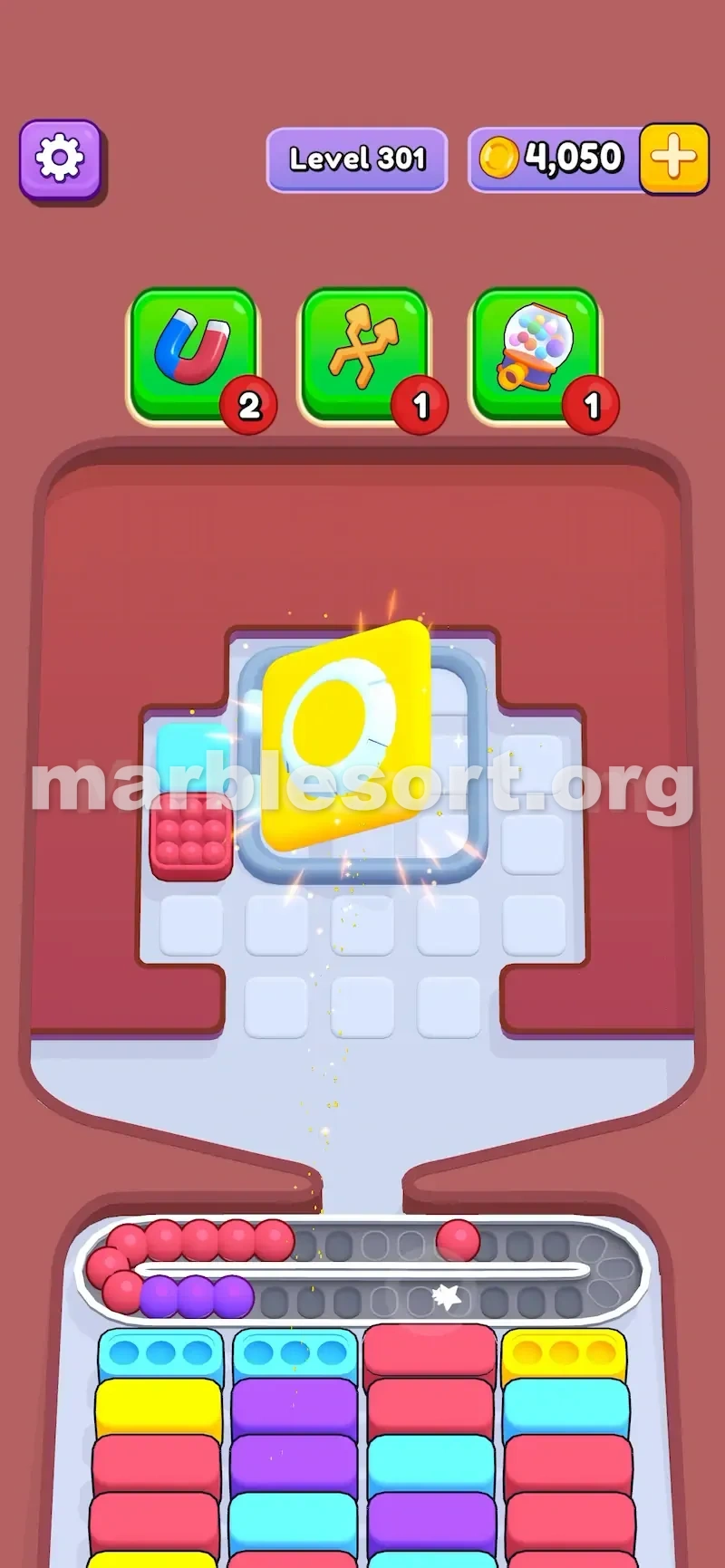
Each time a matching bottom box fills, the number falls by one. Once it hits zero, the panel slides away and whatever it was hiding becomes playable.
If the number is stuck, check whether you actually cleared the right color. A cyan box finishing will never move a red counter, no matter how many times you tap.
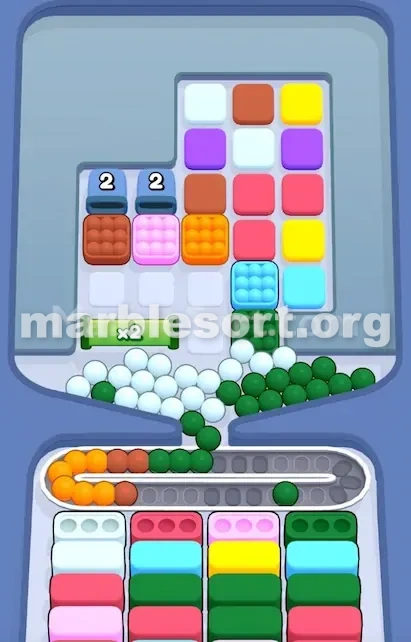
How This Differs From a Plain Numbered Door
Normal panels reward motion. Keep clearing receivers and the gate opens naturally. They give you freedom: any color works, so you can follow the easiest path.
Color Panels reward precision. They lock onto one color and ignore everything else. Clearing other shades still helps the board, but it does not move the gate.
That makes Color Panels feel slower and meaner. You cannot brute-force them by tapping quickly; you must feed the gate exactly what it ordered.
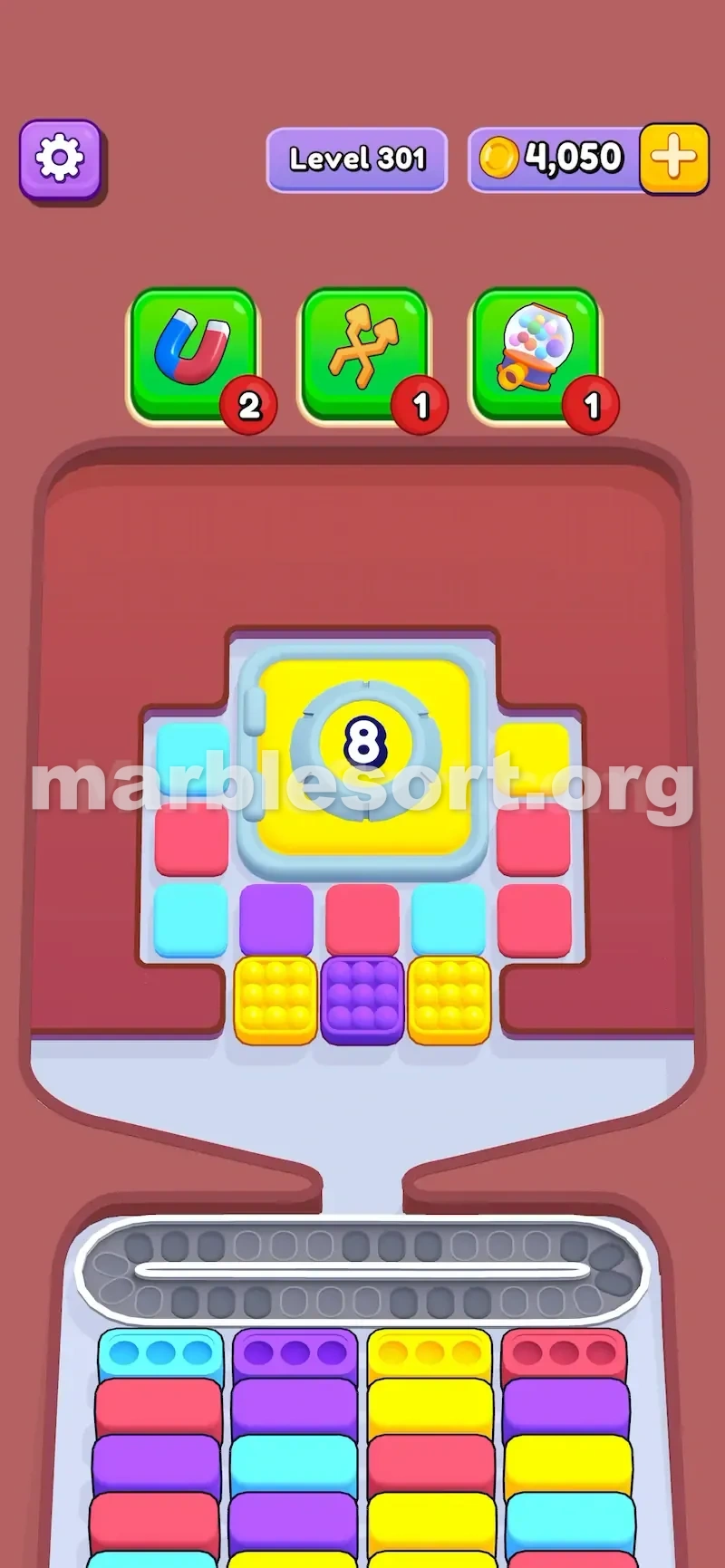
Why Color Panels Are a Silent Trap
The danger is temptation. The panel screams "orange," so every orange box at the top looks urgent. Players dump them early, hoping to rush the counter.
But if only one or two orange receivers are open, the rest of the orange marbles pile onto the belt. They have no home, no clear, and no purpose. The conveyor shrinks, and the next useful move disappears.
Meanwhile, the panel hides the next orange receiver behind a pink or green pile. You still have to clear those blockers, except now you have less room to do it.
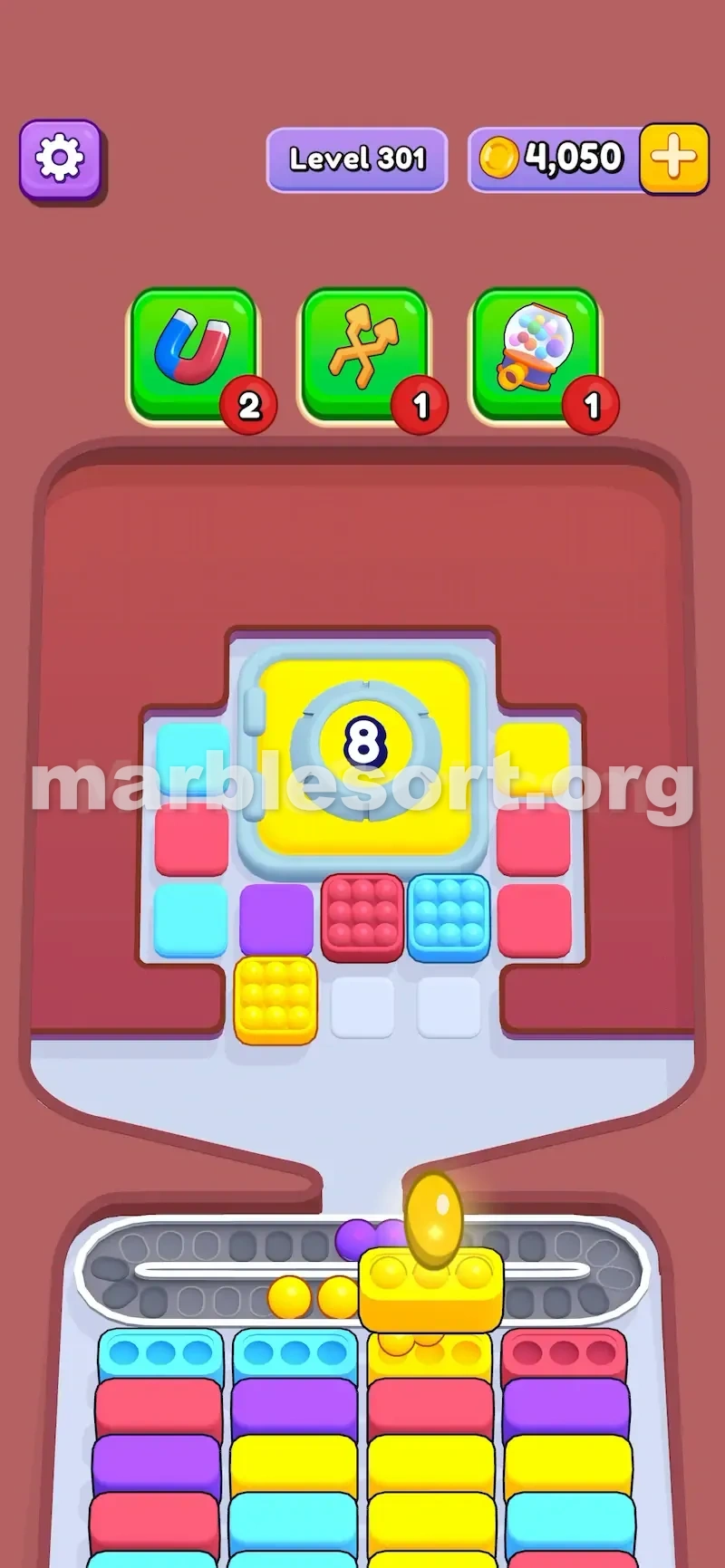
A Safe Plan for Any Color Panel
Start by counting how many target-color receivers are already open at the bottom. Do not drop more target marbles than those receivers can swallow in one wave.
Next, scan for blockers sitting on top of hidden target receivers. Clearing those blockers is not wasted effort — it creates the next landing spots the counter needs.
Feed the panel color in controlled bursts. Drop a box, let the receiver clear, then drop the next one. A steady drip beats a flood.
Finally, keep a few belt slots free for the final push. The last matching box often spills extra marbles, and a full belt will choke right before the gate opens.
Where to Practice the Rhythm
The best way to learn Color Panels is to treat them as patience checks. Pick stages that mix one panel color with several other shades and force you to clear blockers first.
Look for layouts where the target receivers start locked behind two or three layers. Those stages teach you to clear space before feeding the gate.
With practice, the rhythm becomes automatic: read the gate, count the receivers, clear the blockers, then feed the color one wave at a time.