

Video Guide

Panels: The Numbered Door That Stalls Your Board
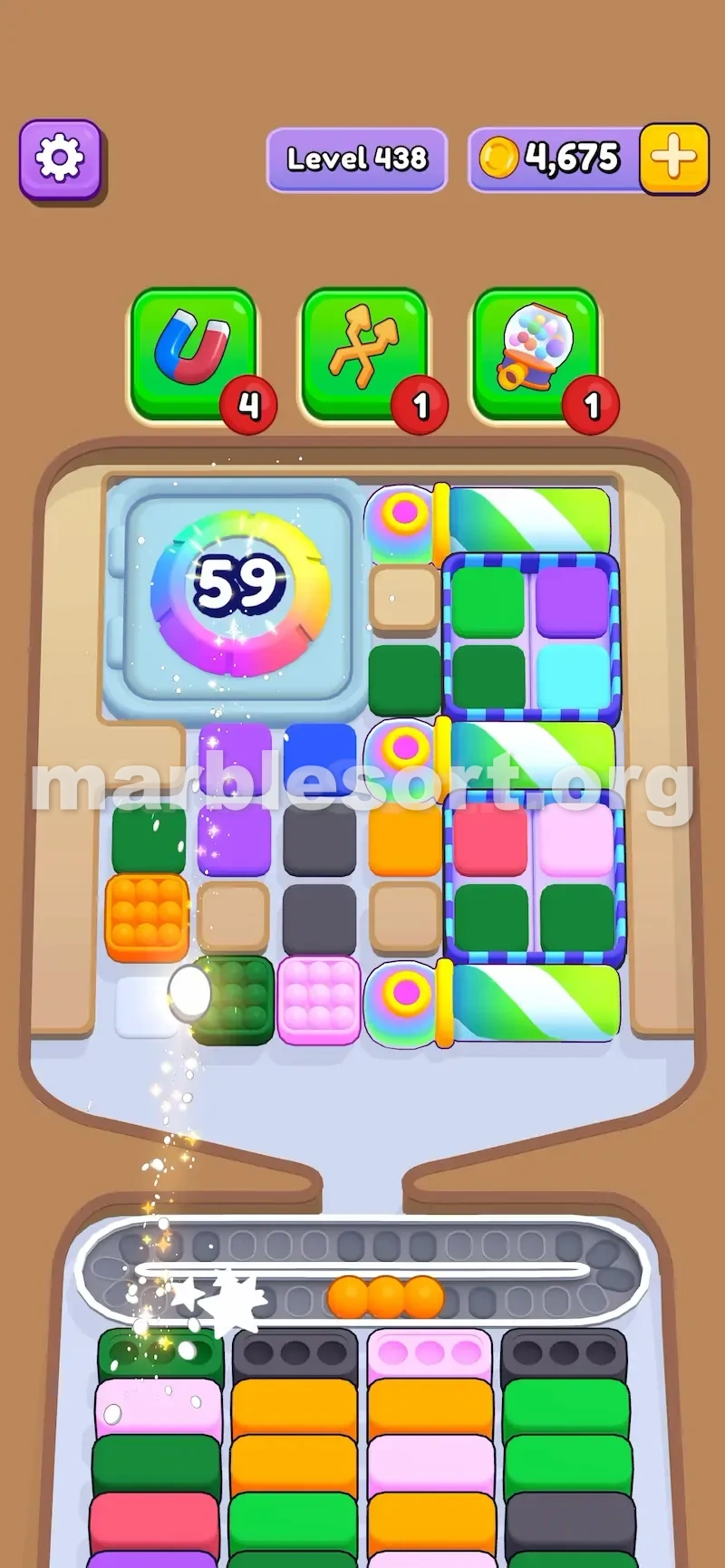
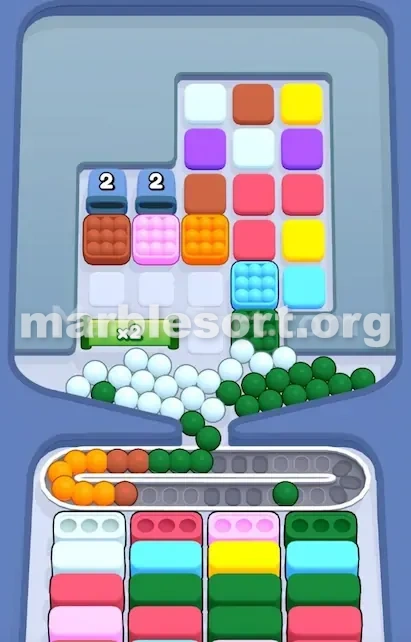
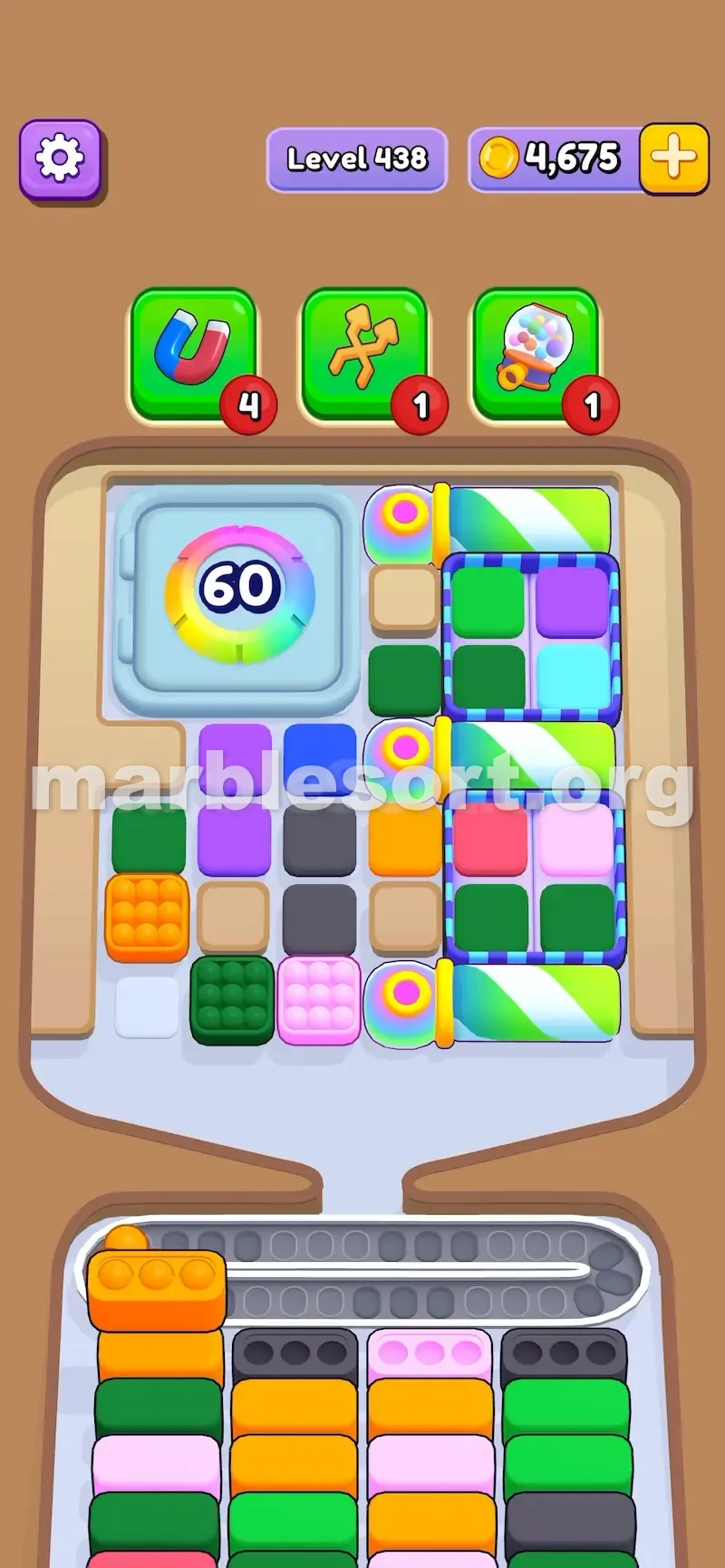
A wide slab with a figure printed on it parks itself over a whole block of slots while your belt is already filling up.
Those slots are useless to you at that moment, even when the shades behind the slab are exactly the ones circling around.
The figure is a countdown of finished base boxes. Show a big count and the wait will be long; when it lands on zero the slab lifts and nine slots wake up. The stall is the whole danger.

What a Panel Actually Locks Away
It never stops one marble or one lane. It strips away knowledge, elbow room, and your list of future targets in a single move.
Nine slots wait behind it. Some may be plain shades that show themselves the second the door lifts, others may stay covered even after it opens.
That mix is why full-board planning breaks down here. From the opening tap you know one thing only: keep finishing visible base boxes until the slab moves.
Common obstacles hand you a chore and then step aside. This one hands you a stretch of play with a shorter menu of destinations, and only later decides whether the reward was worth it.
Reading the Countdown Figure
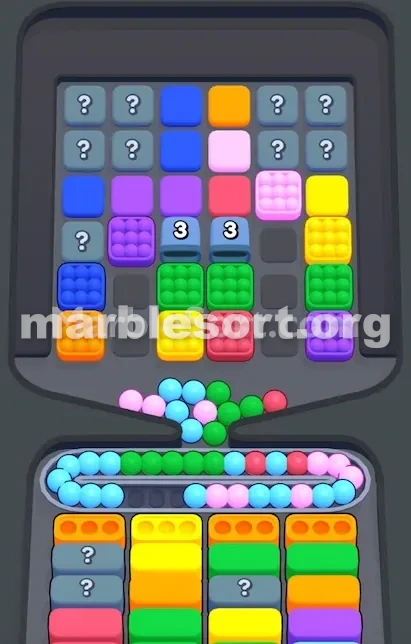
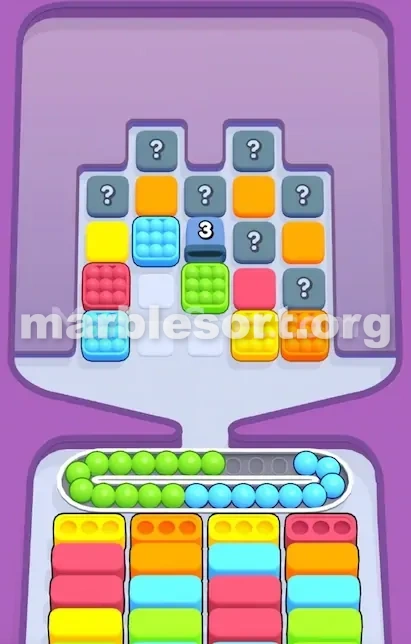
Treat the figure as a progress meter rather than a puzzle. Every base box you complete knocks it down one notch.
The shade of that finished box is irrelevant. So is the box the marbles came out of. Only the finish at the floor counts.
The routine is simple. Glance at the figure early. A large one means those slots are far away and should stay out of your plan. A small one means the board is about to change and you should be ready.
When the slab is one or two finishes from lifting, expect the layout to shift quickly. Fresh shades appear, covered slots may show up, and marbles that were stranded on the belt suddenly have somewhere to sit.
Why Panel Levels Grind You Down
These stages squeeze your resources. Losing a run is rarely about one bad marble; it happens when the belt fills with marbles that have no home.
A slab makes that far likelier because it keeps nine possible homes sealed off.
You might have red, blue and green waiting in line while their matching slots sit behind the door, and you still have to grind through the visible ones first.
Three squeezes land together: fewer usable base boxes, no view of the shades coming later, and a belt you must keep tidy the whole time you wait. You are not merely solving what sits in front of you.
The Clean Way to Play Around a Panel
Stop treating the slab like a random obstacle. Every finish you rack up buys board space back.
Check the figure before your first tap. If it reads high, write those hidden slots out of your short plan entirely.
Hunt the cheap finishes. Any base box needing only a marble or two goes first, because those quick wins trim the counter and open room at once.
Do not dump a heap of marbles simply because a box is available. With no matching slot at the floor, they will ride the belt and cause trouble. If a yellow or purple slot is already open below, feed that instead. And when the figure gets low, stop tapping on reflex: watch the belt, note which shades are circling, then choose the moment to lift the door.
When Covered Slots Hide Behind the Door
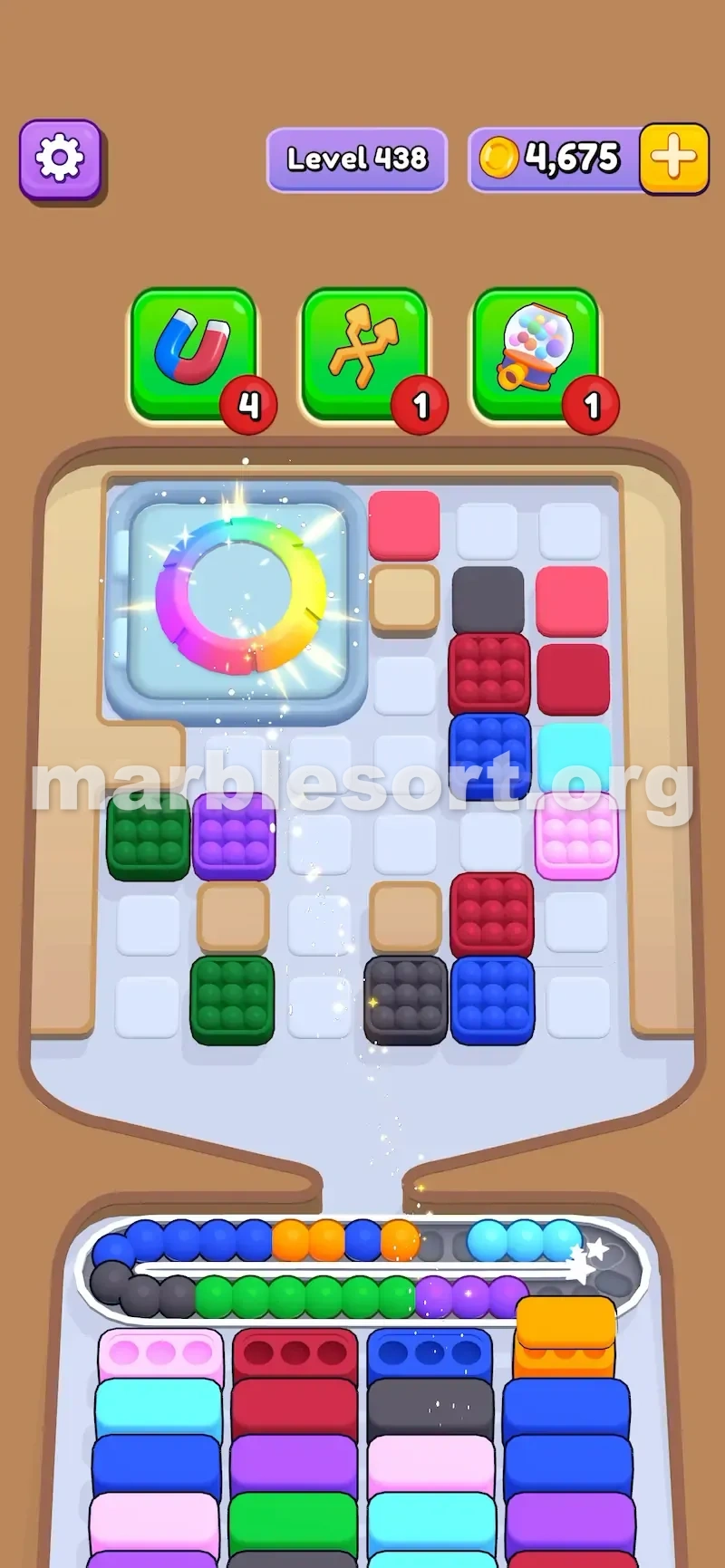
The nine slots are not always plain shades. Plenty of stages tuck covered boxes back there, so the slab lifts and you still cannot read every colour.
The game happily stacks one obstacle on top of another like that.
When it does, resist the urge to fling marbles onto the belt just because the door finally moved.
If a covered slot needs its neighbours cleared before it shows its shade, clear whatever readable boxes sit nearby first. The harder versions therefore play out as two separate rounds: first you grind enough finishes to lift the slab, then you work out what the freshly exposed slots actually want.
Beating Hard Panel Stages
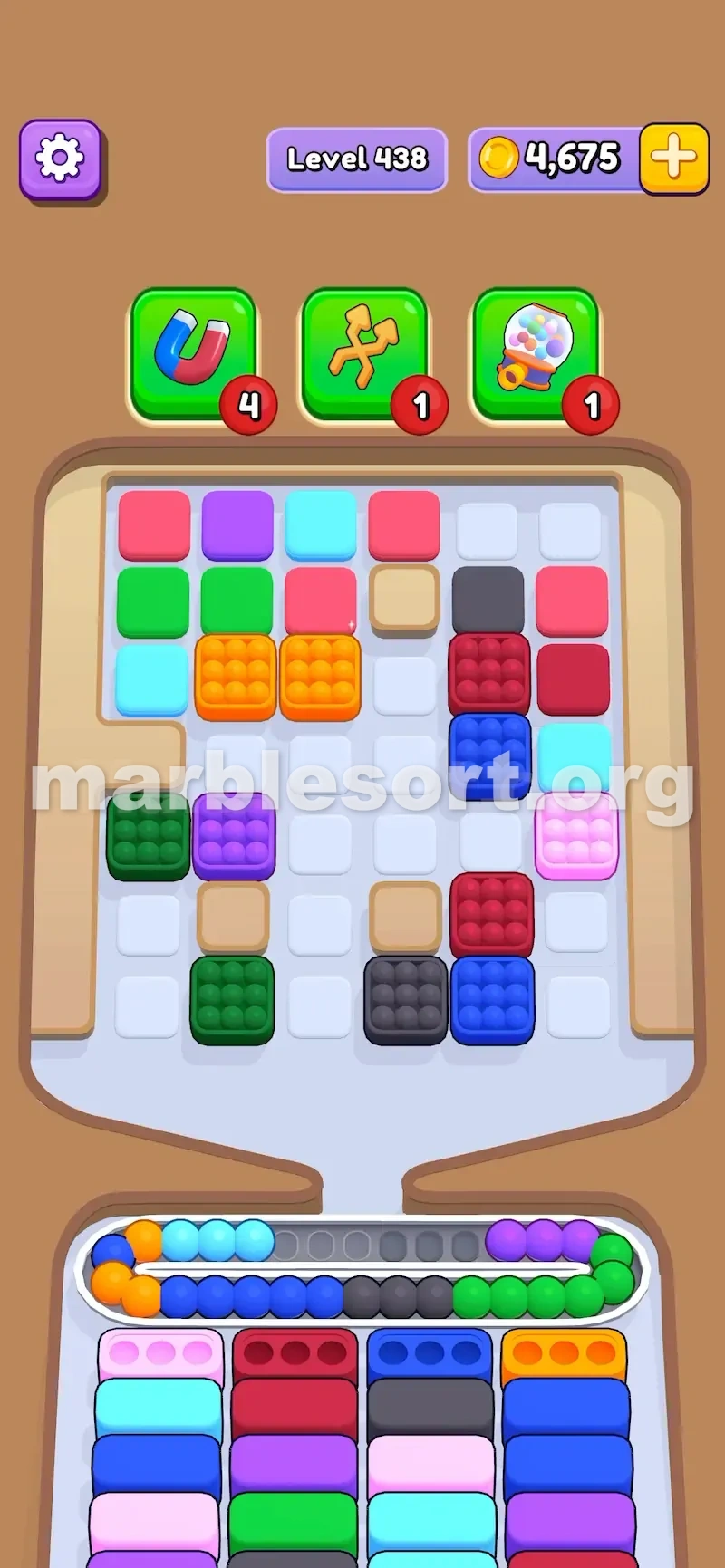
The sharpest trick is holding the final finish back. As the figure nears zero, leave one easy base box a single marble short if the board lets you.
Say a blue slot wants one last blue marble: sit on that drop until the belt is genuinely about to clog.
Then land it, let the slab lift, and watch nine fresh destinations arrive at the exact beat you needed them.
This pays off hardest when the belt is carrying several shades with nothing to match. Choosing the right second to lift the door can turn a run you were about to lose into a comfortable recovery.